
Picture this in a construction project
The material was ordered on time.
The invoice was approved.
The stock register showed availability.
Yet when the site needed it, no one could clearly confirm where the material was or how much had been used.
Procurement assumed the job was complete once the order was placed. Stores confirmed receipt. Site teams' expected availability. Each step looked complete, but between purchase and consumption, the trail disappeared.
This gap is common in construction material tracking. Many projects document procurement and delivery well. However, once materials move from storage to site execution, tracking weakens.
When purchase records, inventory movement, and actual usage are not connected, teams lose visibility between procurement and consumption.
Why material control looks strong on paper
Construction projects usually maintain structured documentation during procurement and receiving.
Procurement teams manage purchase orders and supplier transactions through construction procurement management systems. Stores teams verify quantities and update stock registers through construction inventory management processes.
Because of this documentation, project records often show clear procurement activity and available inventory.
However, these records mainly confirm ordering and receiving. They rarely show how materials move after leaving the store. As a result, construction material tracking can appear complete while actual usage remains unclear.
Where visibility is lost in construction material tracking
The visibility gap typically appears when materials move from stores to site execution.
Materials may be issued for multiple activities, but the issue is not always linked to a specific task. The system records that materials left the store, but not how they were used.
For example, materials issued for slab work, masonry, or finishing may be recorded together rather than tied to individual activities. This makes it difficult to trace actual usage.
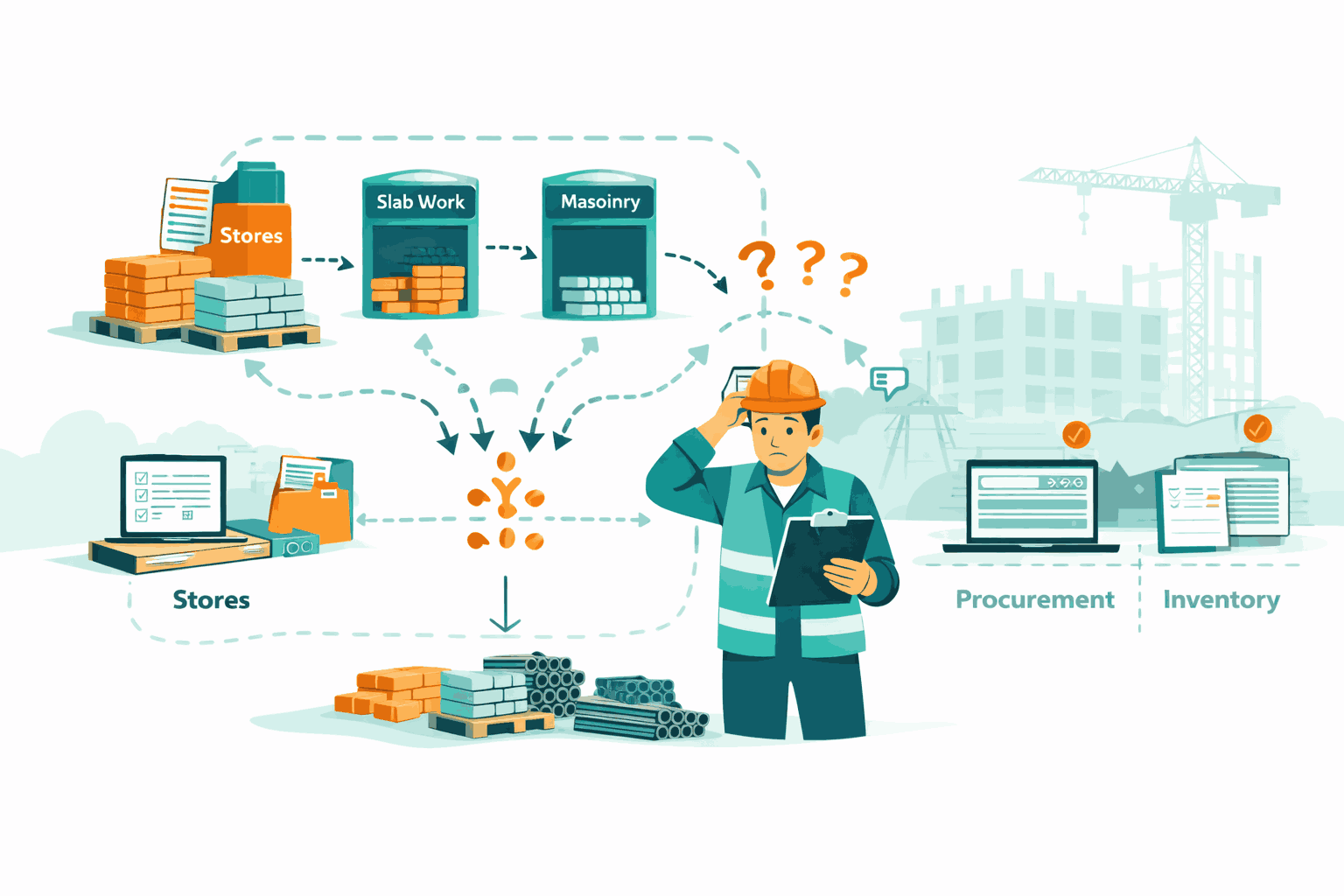
Without this connection, construction inventory management reflects stock movement instead of real consumption. Many organizations address this using construction material management software that connects issuance with project activities and improves material tracking in construction.
How silos break the material flow
Construction workflows are often divided across departments.
Each function manages its own data, but material tracking in construction requires continuity across these stages.
When systems operate independently, procurement records confirm buying and inventory records confirm receipt, but neither clearly shows how materials moved to actual usage.
Integrated construction material management software helps maintain continuous construction material tracking.
Why variance appear too late?
In many projects, discrepancies appear only during reconciliation.
Overconsumption may become visible when inventory reduces faster than expected. Wastage may only appear when planned quantities are compared with remaining stock.
Because construction material tracking was not updated continuously, identifying the source of variance becomes difficult.
Even accurate construction procurement management and construction inventory management records cannot explain usage without activity level tracking.
The cost of disconnected material data
When construction material tracking does not extend from procurement to consumption, projects face operational risks.
Materials expected on site may be unavailable during execution. Procurement teams may need urgent purchases through construction procurement management processes. Budget monitoring also becomes harder when usage exceeds planned quantities.
Differences between physical stock and system records can also reduce confidence in construction inventory management reports.
The problem
Material data exists at multiple stages of the project lifecycle.
Procurement records materials through construction procurement management. Stores record quantities through construction inventory management. Site teams track activity progress.
However, the data often exists in separate systems.
Because construction material tracking is not continuously connected across these stages, execution teams may not see material risks early.
The real issue
Material tracking does not usually fail during procurement.
It breaks during execution.
When materials move from purchase documentation to physical work on site, material tracking in construction often stops updating in real time. Once that connection breaks, construction material tracking becomes incomplete.
The solution
Effective construction material tracking requires connecting the full material lifecycle.
A structured system should:
- Link purchase orders and receipts with project activities
- Track material issuance against execution progress
- Update construction inventory management automatically when materials are used
- Provide real-time visibility across procurement and usage
This is the role of modern construction material management software.
Inncircles integrated construction software connects construction procurement management, construction inventory management, and material tracking in construction into a unified workflow.
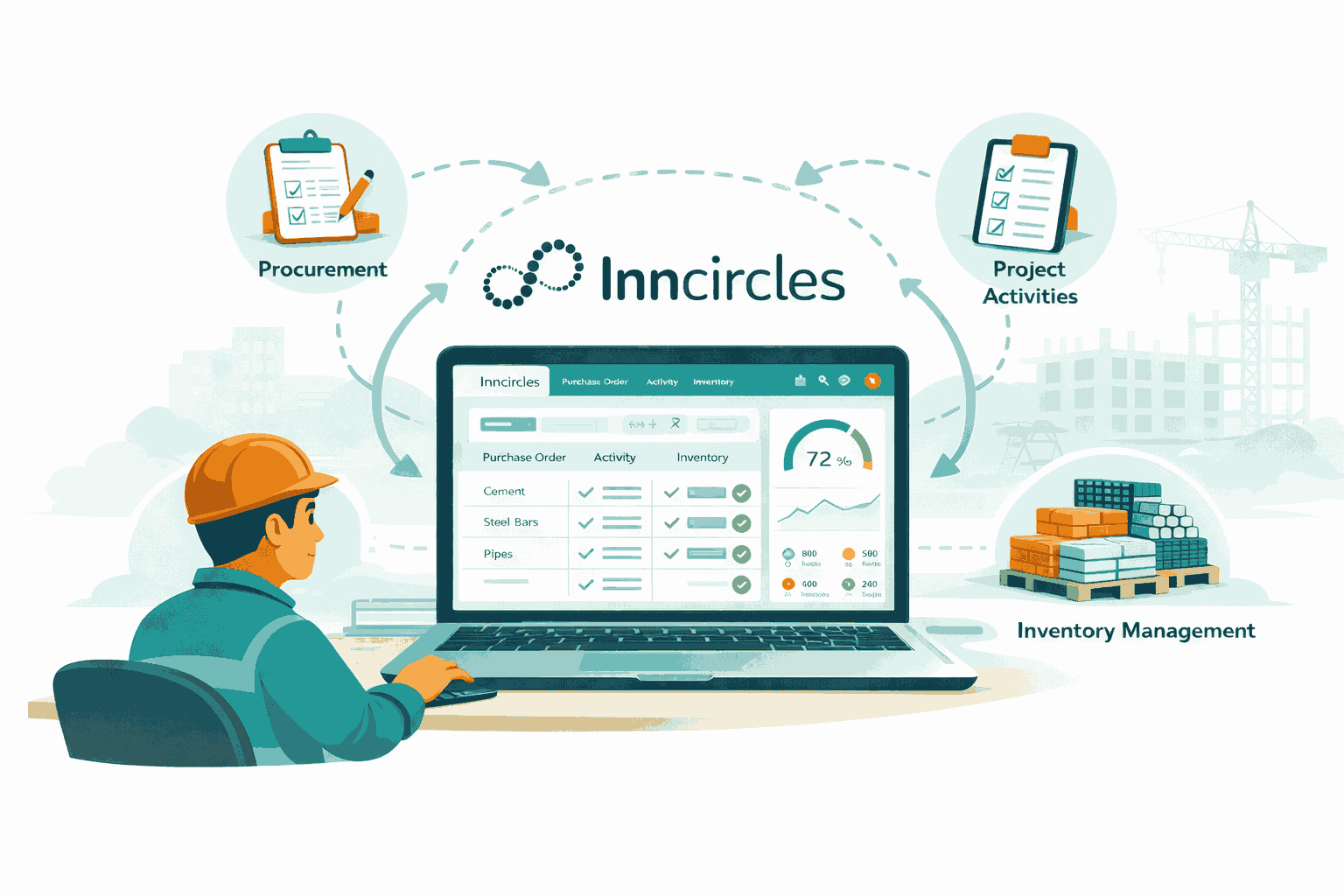
This allows project teams to track materials from purchase to final usage with consistent visibility.
The takeaway
Materials rarely disappear suddenly.
They disappear when the data stops following them.
The objective of material tracking in construction is simple. Keep the material journey visible from purchase to actual usage.
That requires connecting construction procurement management, construction inventory management, and site execution into one continuous workflow.
This is where Inncircles helps construction teams move beyond static reports. With integrated construction material management software, teams can track materials from order to site consumption, identify variances early, and maintain reliable construction material tracking across every project.
If material visibility still stops at procurement or stock registers, it may be time to upgrade how your projects track materials.
Explore how Inncircles helped their valued customers to build a fully connected material workflow.