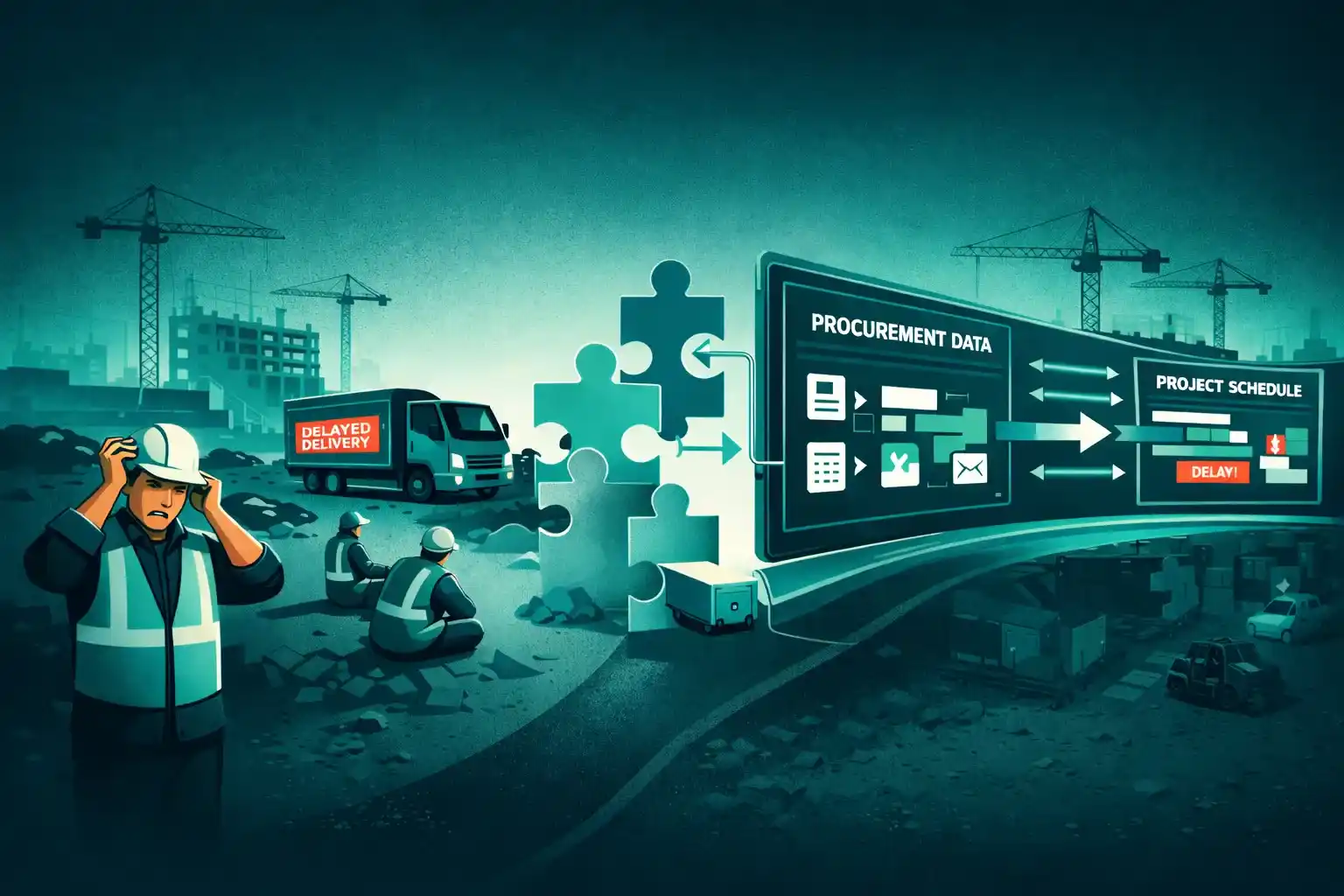
Picture this in your construction project
The delivery truck arrived three days behind schedule.
By then, the site was already idle.
The team blamed the supplier. Procurement blamed logistics. Planning blamed execution. Everyone agreed on one thing: the material delay had derailed the schedule.
But when the timeline was reviewed, the signs had been there all along. The purchase order was issued late. The approval cycle had slipped. The dependency in the schedule was never updated. The risk was visible but not connected.
In most construction projects, construction material delays don’t come as a surprise. What surprises teams is realizing too late that the schedule never saw them coming.
Why material delays feel sudden
Site work runs on just-in-time deliveries. A PO that goes out two days late, a vendor who pushes dispatch, and an approval sitting in an inbox. None of these looks like an emergency in the moment. But everyone quietly chips away at the delivery window.
The schedule keeps assuming materials will arrive as planned. It doesn't know about the slipped approvals or the pushed dispatch date. So construction material delays build in the background, invisible until the site stops.

The disconnect between procurement and planning
Construction procurement planning and project scheduling run as two separate functions. Procurement tracks orders and delivery dates. Planning tracks activities and milestones. Both are doing their jobs, just not in sync with each other.
When a PO gets issued late or a vendor changes a date, that information stays inside procurement. It doesn't update the schedule. Planners don't get notified. The schedule continues showing the original delivery date even when procurement data says otherwise.
That gap is exactly where construction material delays grow, silently, between two workflows that never talk to each other.
How early signals get ignored
Late RFQs get treated as routine. Vendor follow-ups stay within the procurement team. Approval delays don't get flagged to planners or site leads.
Each of these alone doesn't look alarming. Together, they add up to a missed delivery. Because construction procurement planning and site execution don't share a live view of material status, planners work on assumptions. By the time those assumptions prove wrong, the schedule has already missed the adjustment window.
Why schedules fail to reflect reality
Schedule activities and material readiness are rarely linked. A task might show a start date with no live connection to whether that material is confirmed, in transit, or held up.
Updates to project schedule management happen after the fact. A delay occurs, then someone adjusts the plan. By then, the ripple has already started. When material tracking software isn't connected to the project timeline, the schedule stops being predictive and becomes a record of what went wrong.
The ripple effect of a single material delay
One missed delivery rarely stops just one activity. Crews go idle. Equipment sits. Downstream trades lose their slot. A single construction schedule delay from a material gap forces resequencing across the board, and the cost compounds fast.
The root cause isn't the supplier. It's the disconnection between construction procurement planning data and execution visibility.
The problem
Construction material delays don't just come from suppliers running late. The deeper issue is structural.
Material tracking software and scheduling operate as separate systems. Early procurement risks never show up in the project plan. Execution teams learn about delays only after the damage is done.
And the schedule shifts from being a tool that guides work to one that just reacts to what's already gone wrong.
The real issue
Construction material delays don't derail schedules.
Disconnected construction procurement planning and project schedule management do.
The solution
Preventing schedule shocks starts with connecting material data to execution planning.
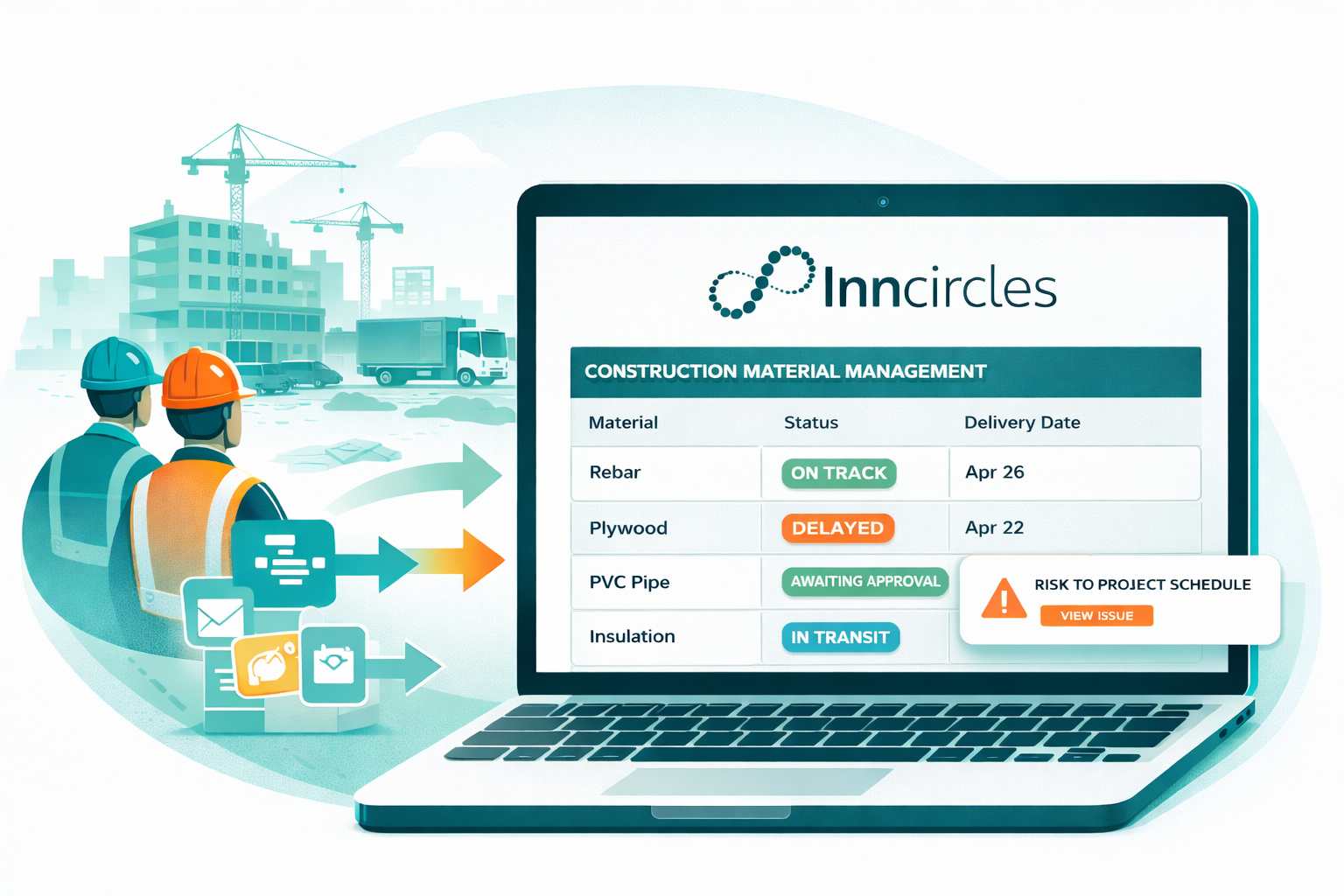
When material orders and approvals are linked to scheduled activities, planners can see risk as it builds. When material tracking software feeds live procurement status into the project timeline, the schedule reflects reality instead of assumptions. When site teams and procurement share the same view, a construction schedule delay gets flagged before it stops work.
Inncircles integrated construction software connects construction procurement planning with project schedules so material risks are seen early, plans are adjusted in time, and execution stays predictable.
Before you decide
Schedules don't fail because suppliers are late. They fail because risks stay invisible until they arrive. When material data is connected to execution, construction material delays can be managed before they stop work, not after.