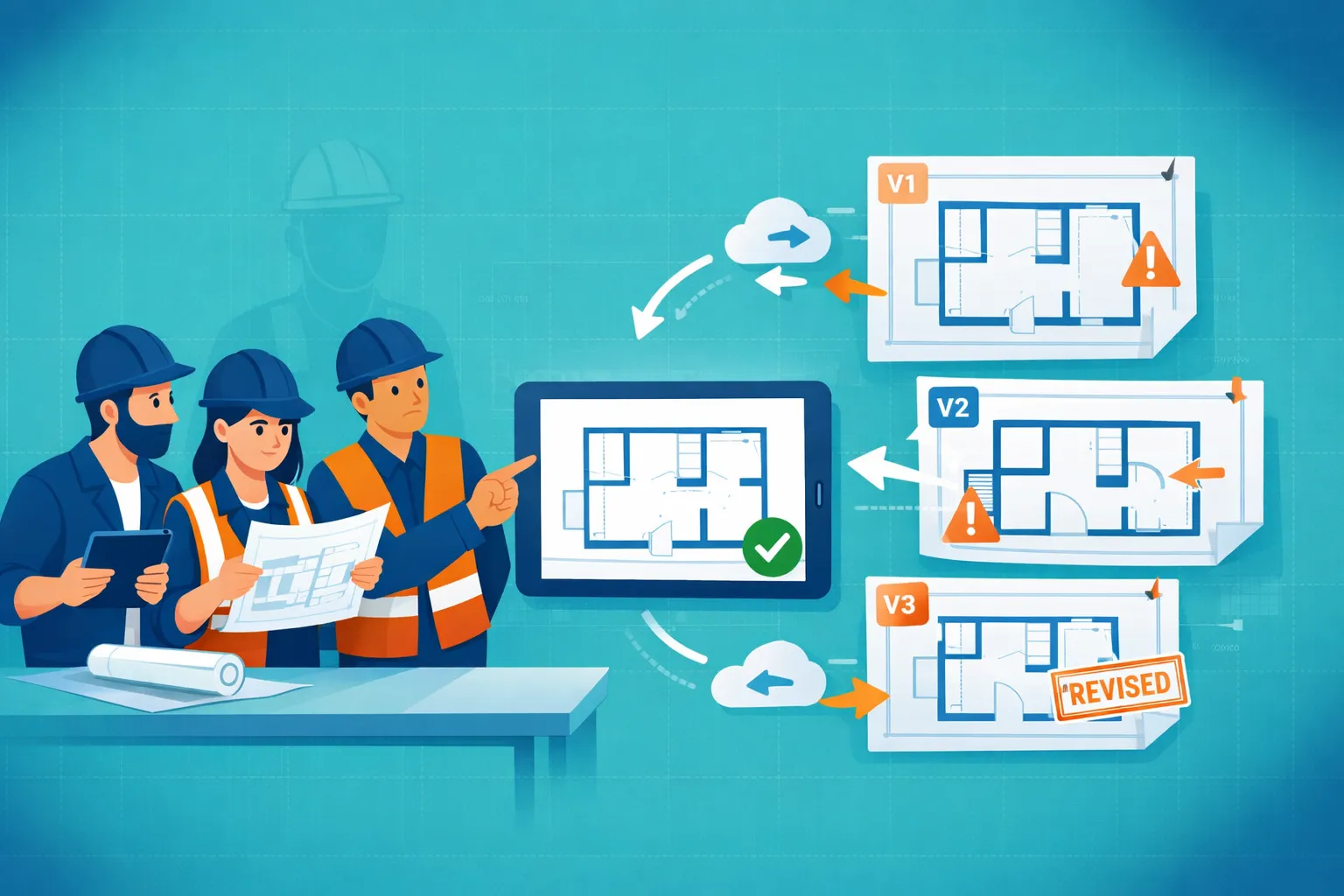
Large construction projects depend on one simple thing more than most people realize. Every team must work from the same construction drawings at the same time.
But in reality, that rarely happens.
Imagine a coordination meeting.
Everyone had a drawing.
But no one had the same one.
Three teams referenced three different versions of the same plan. One showed a revised layout. Another carried an older approval stamp. The site team had printed sheets marked up during a walkthrough. Each team believed they had the correct document.
Work had already started.
By the time the mismatch surfaced, materials were installed, and rework was unavoidable. The problem was not design or approvals. It was scale.
As large construction projects grow, more consultants, contractors, and site teams depend on the same construction drawings.
Without strong construction drawing management, even small communication gaps can lead to multiple versions circulating across the project.
Why does drawing confusion increase with project scale
Larger projects increase pressure on information flow. More stakeholders need access to the same construction drawings, and revisions happen frequently through RFIs, coordination updates, and design clarifications.
Work also progresses across several zones in parallel. Civil, structure, services, and interiors often move at the same time. When information moves quickly between teams, maintaining consistency becomes harder.
Without reliable construction document management, teams may unknowingly rely on different versions. Over time, maintaining a clear drawing version control becomes a challenge.
How multiple versions enter the system
Drawing confusion rarely begins with a major mistake. It usually develops through normal project communication.
A revised drawing is shared through email. Someone downloads it locally for quick access. Another team prints it for a meeting. During a site walkthrough, notes are written directly on the sheet.
Individually, these actions seem harmless. Together, they create multiple working versions of the same construction drawings across the project.
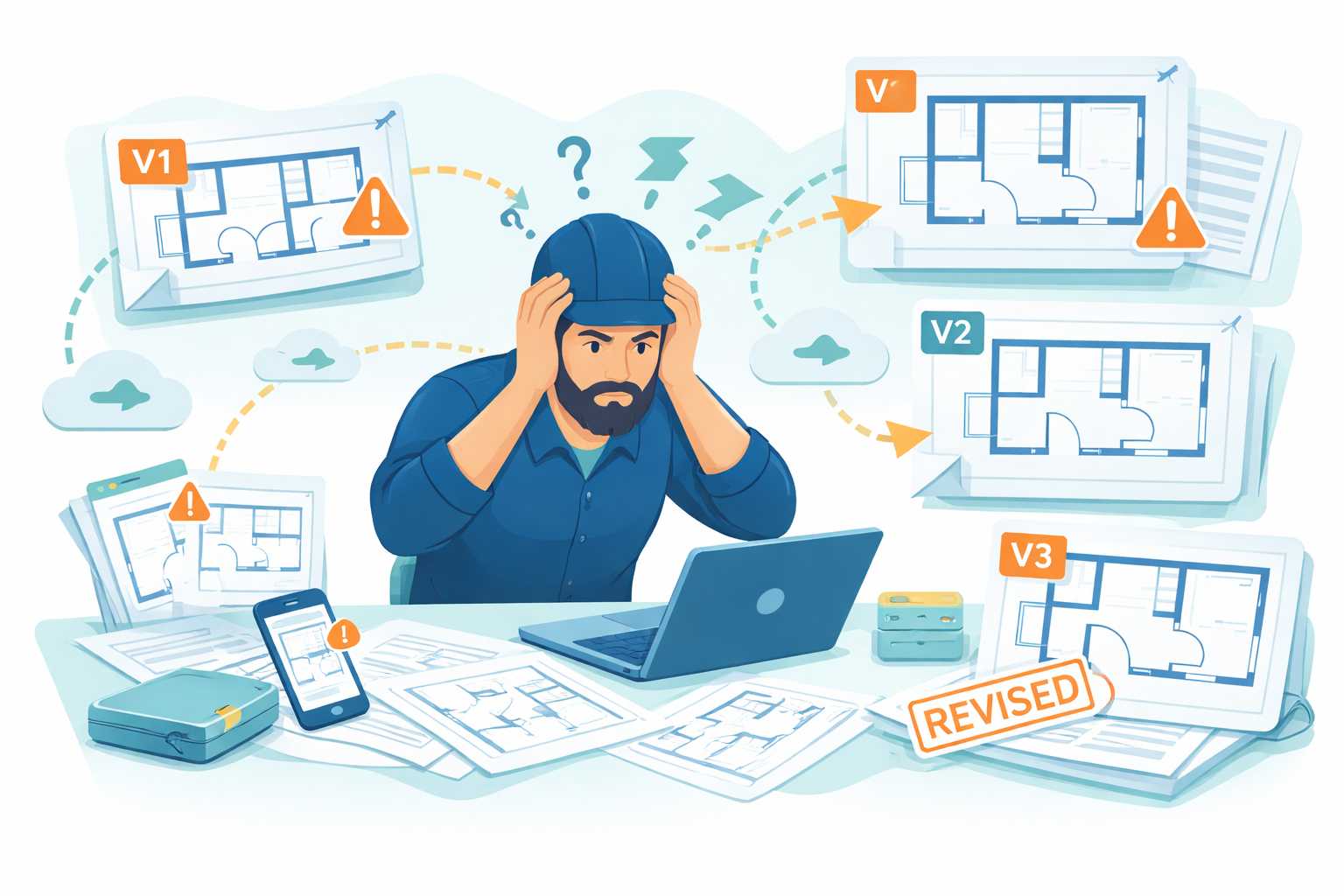
Without structured construction drawing management, identifying the latest approved version becomes difficult.
Where execution loses track of the latest drawing
Execution teams operate in fast-moving environments where information comes from emails, calls, meetings, and shared folders.
Approvals may happen during discussions, yet the updated construction drawings do not always reach every team. In some cases, verbal instructions guide work while the official documents remain unchanged.
When questions appear later, teams must trace which version guided the work. Without dependable drawing version control, this becomes difficult.
Why are errors detected too late?
Drawing-related issues usually appear only after installation begins.
Construction rarely pauses while teams confirm documents. Meetings tend to focus on the schedule and coordination rather than verifying which drawings are currently being used.
As a result, differences between versions may surface only after work is completed. In large construction projects, that shift from prevention to correction can affect timelines and cost.
Why traditional document control breaks at scale
Traditional systems are often designed to store construction drawings, approvals, and revisions. However, they do not always show how those drawings are used during execution.
When documentation is separated from site activity, teams may rely on copies outside the system. This weakens construction document management and makes consistent drawing version control harder to maintain.
As projects grow larger, the gap between documentation and execution becomes clearer.
The problem
Large construction projects generate hundreds or thousands of construction drawings and revisions. These documents move through emails, shared drives, meetings, and site discussions while work continues across the project.
If construction document management is not connected to execution, different versions can quietly guide different teams.
The real issue
Drawing confusion is often described as a documentation problem.
In reality, it is an execution visibility problem.
Teams need clarity on which construction drawings are guiding work across the site.
The solution
Reducing confusion requires connecting documents directly to execution.
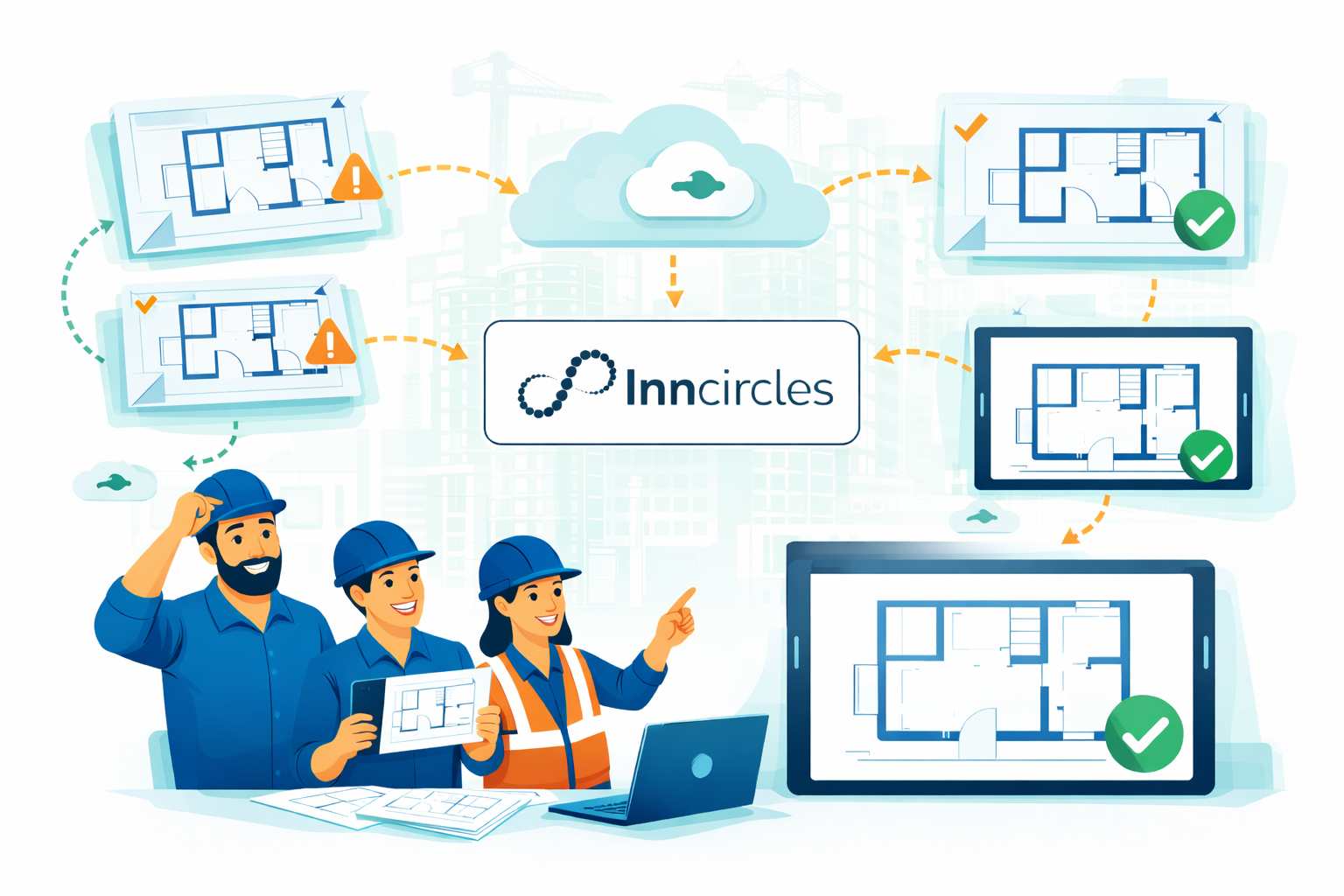
Effective construction drawing management allows teams to access the latest construction drawings, understand revisions through clear drawing version control, and confirm that updates reach everyone involved.
Inncircles help make this possible. Its integrated construction software brings construction drawing management, construction document management, and execution workflows into one environment, so drawings are part of daily work rather than separate files for large construction projects.
Build with clarity, not corrections
Large construction projects rarely struggle because drawings are wrong.
They struggle when the right construction drawings do not reach the right team at the right time.
With the right construction management software, teams gain visibility, maintain drawing version control, and keep execution aligned from planning to delivery.
If your projects are growing in scale and complexity, it may be time to rethink how drawings move through your workflow.
See how Inncircles’ valued customers manage drawings, track versions, and connect documents with execution.
A quick demo might help you to experience how modern construction teams stay aligned from drawing to delivery.