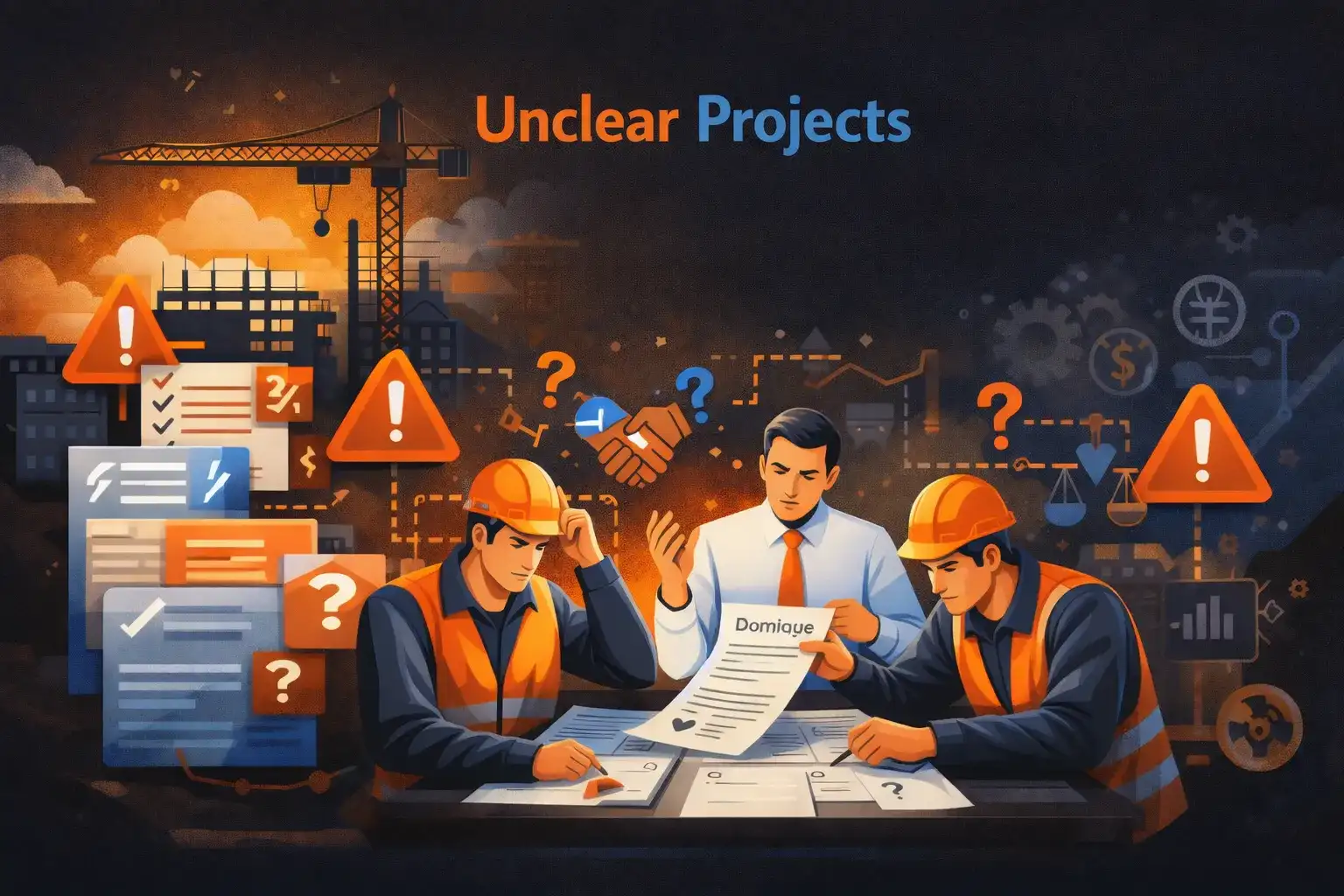
Most construction projects start the same way. The construction contracts are signed, the scope looks clear, and work begins with confidence.
Problems usually do not appear right away. That is what makes unclear construction contracts risky. The gaps stay hidden until the project is already moving. When questions come up on site, teams realize the contract does not give clear answers.
This is how unclear construction contracts quietly increase risk across a project.
In this blog, you’ll see how construction AI removes ambiguity in unclear construction contracts, helping teams reduce risk, speed decisions, and stay aligned on site.
Why unclear construction contracts rarely feel risky at the start
During early reviews, teams focus on big items. Price, timelines, and scope get the most attention. If those look aligned, the construction contracts move forward.
Smaller details are easier to skip. Responsibilities that sound broad. Clauses that depend on interpretation. Language that feels familiar from past projects.
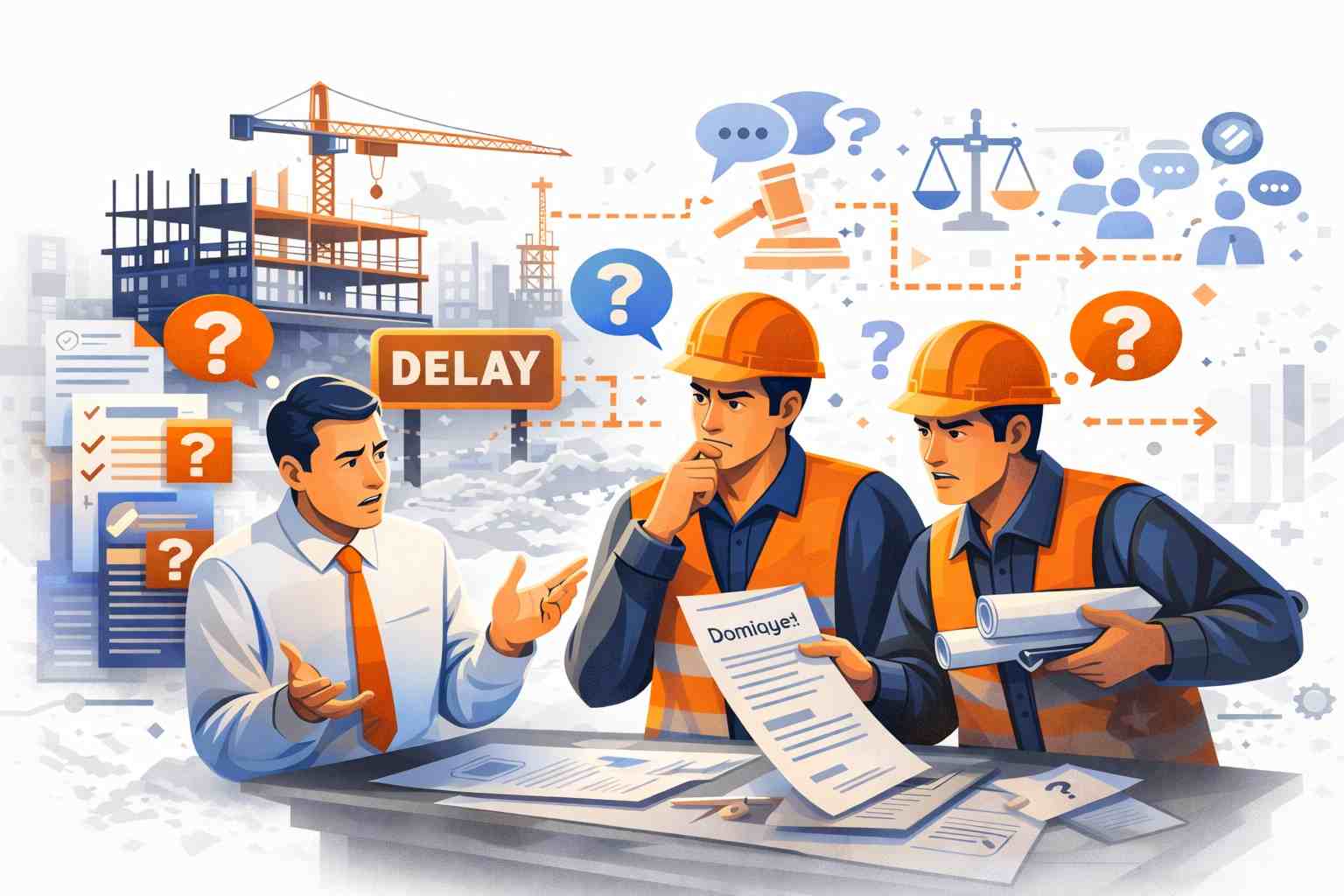
At this stage, ambiguity in construction contracts does not feel like a problem. It feels manageable. Most teams assume they will sort it out later if needed.
That assumption is where risk starts to build.
What changes once work reaches the site
Once execution begins, the questions come quickly.
Who is responsible for the delay?
Who covers the cost of the change?
What approvals are required before work can continue?
When construction contracts are not clear, different people read the same clause in different ways. Simple decisions take longer. Teams pause to confirm instead of moving forward.
Work does not stop, but it slows down. That slowdown often goes unnoticed at first.
How unclear construction contracts slow down daily decisions
Ambiguous language in construction contracts makes teams cautious.
Engineers hesitate before acting.
Managers escalate decisions instead of making them.
Commercial teams delay commitments to protect themselves.
None of these actions seems serious on its own. Together, they create friction. Tasks take longer. Coordination becomes harder. Schedules start to slip.
This is how delays build without a single major issue.
How construction project risk grows over time
Disputes rarely start suddenly. They build over time through small, unclear decisions.
Teams use temporary workarounds to keep moving. Expectations shift. Alignment becomes assumed instead of confirmed. Over time, trust wears down.
By the time disputes appear, months of unclear decisions tied to construction contracts have already shaped each side’s position.
What feels unexpected usually has been developing for a long time.
How unclear construction contracts shift risk
Unclear construction contracts do more than slow work. They shift risk.
When responsibilities are not clearly defined, the party with less leverage often absorbs the uncertainty. Costs are carried temporarily. Delays are accepted to keep work moving.
Over time, those temporary decisions become real financial exposure. This is one of the most common sources of hidden risk in construction projects.
Why traditional contract reviews still miss problems
Even contracts that are reviewed carefully can carry hidden risk.
Familiar language creates comfort. Reviewers assume shared understanding instead of checking how clauses will be applied during execution. Problems do not stand out on paper.
Manual reviews rely on time, experience, and memory. As projects grow and document volumes increase, those methods do not scale well.
This is why unclear construction contracts continue to cause issues even on well-managed projects.
Why clarity matters in construction contracts
Clear construction contracts help teams move faster and with more confidence.
They reduce guesswork.
They support quicker decisions.
They keep teams aligned when things change.
When issues come up on site, teams should not have to interpret intent. They should be able to act based on clear responsibilities.
How construction AI helps reduce contract risk early
This is where construction AI changes the approach.
Instead of relying only on manual reviews, construction AI works directly with the content inside construction contracts. It helps teams identify unclear language, responsibility gaps, and risk areas earlier in the project.
Bob supports construction workflows by extracting obligations, notice requirements, and responsibilities from construction contracts and linking them back to the original clauses. This makes it easier for teams to understand who is responsible for what, without debate or interpretation.
With Bob, teams can:
- Identify unclear clauses before execution starts.
- Respond faster to changes and delays.
- Keep legal, commercial, and site teams aligned.
- Reduce risk without slowing down work.
Instead of reacting to problems later, teams get clarity when it matters most.
To sum up
Unclear construction contracts do not cause problems overnight. They create small delays, slow decisions, and hidden risk over time.
By the time the impact becomes visible, progress has already been affected.
Projects rarely struggle because construction contracts are missing. They struggle because construction contracts are unclear.
And today, agentic AI solutions like Bob helps teams address that clarity early, before risk reaches the site.