
In a construction project, the coordination meeting often ends with an agreement.
Everyone nods. Multiple teams are aligned. The owner approves. The PMC validates. The contractor confirms to move forward.
Yet days later, the issue remains unresolved.
One team assumed another would take the lead. Someone thought approval was pending. Someone else believed the task had already been completed. No one ignored it. Everyone felt responsible. And that is exactly why construction project accountability broke down.
In large construction projects, where owners, consultants, contractors, and vendors operate together, effort is rarely the problem. The real friction lies in unclear responsibility. Without structured ownership, even the best coordination turns into slow execution. That is where construction collaboration software and structured project execution management start to matter.
Learn how structured construction project accountability improves execution and reduces delays across stakeholders.
Why multi-stakeholder projects create shared responsibility
In multi-party projects, decision-making rarely belongs to one team.
Owners review. PMCs validate. Contractors execute. Consultants advise. Vendors support.
When several roles touch the same activity, responsibility becomes layered. Discussions happen in meetings. Clarifications flow through messages. Approvals move across emails.
But here is the catch.
Conversations create alignment. They do not automatically create ownership.
Overlapping roles blur accountability. If an activity impacts safety, cost, quality, and timeline, it attracts multiple stakeholders. Each believes they are “involved.” Very few confirm who is “responsible.”
This is where construction project accountability weakens. The assumption that “someone else is handling it” quietly slows progress.
Without structured project execution management, coordination remains informal. That informality might feel collaborative, but it quietly introduces delay.
How ambiguity creeps into daily execution
Let’s move from strategy to daily operations.
A task is discussed during a review call. Everyone agrees it must be resolved. The minutes capture the concern. But the activity itself is not formally assigned inside the workflow.
Responsibilities get split. One team verifies drawings. Another arranges site access. A third confirms compliance.
But who closes it?
However, unless one role is formally responsible for closure, tasks remain suspended among stakeholders. Follow-ups depend on individuals remembering to check.
This is how ambiguity grows inside execution.
Without clear construction project accountability, responsibilities live in conversations rather than in structured systems. Even advanced teams struggle when there is no defined ownership per activity.
And this is precisely where structured construction collaboration software becomes critical. It moves responsibility from verbal agreement to visible assignment inside the execution flow.
Why do issues stay open longer than they should
You may have seen this pattern.
An issue surfaces. It is acknowledged. It appears in a meeting. Then it disappears until the next review. Why?
Because ownership visibility is missing.
When there is no central tracking of who owns what, delays stay hidden. Escalations happen only when someone notices the impact on milestones. Recovery becomes reactive.
By the time leadership reviews the issue, dependencies have already piled up.
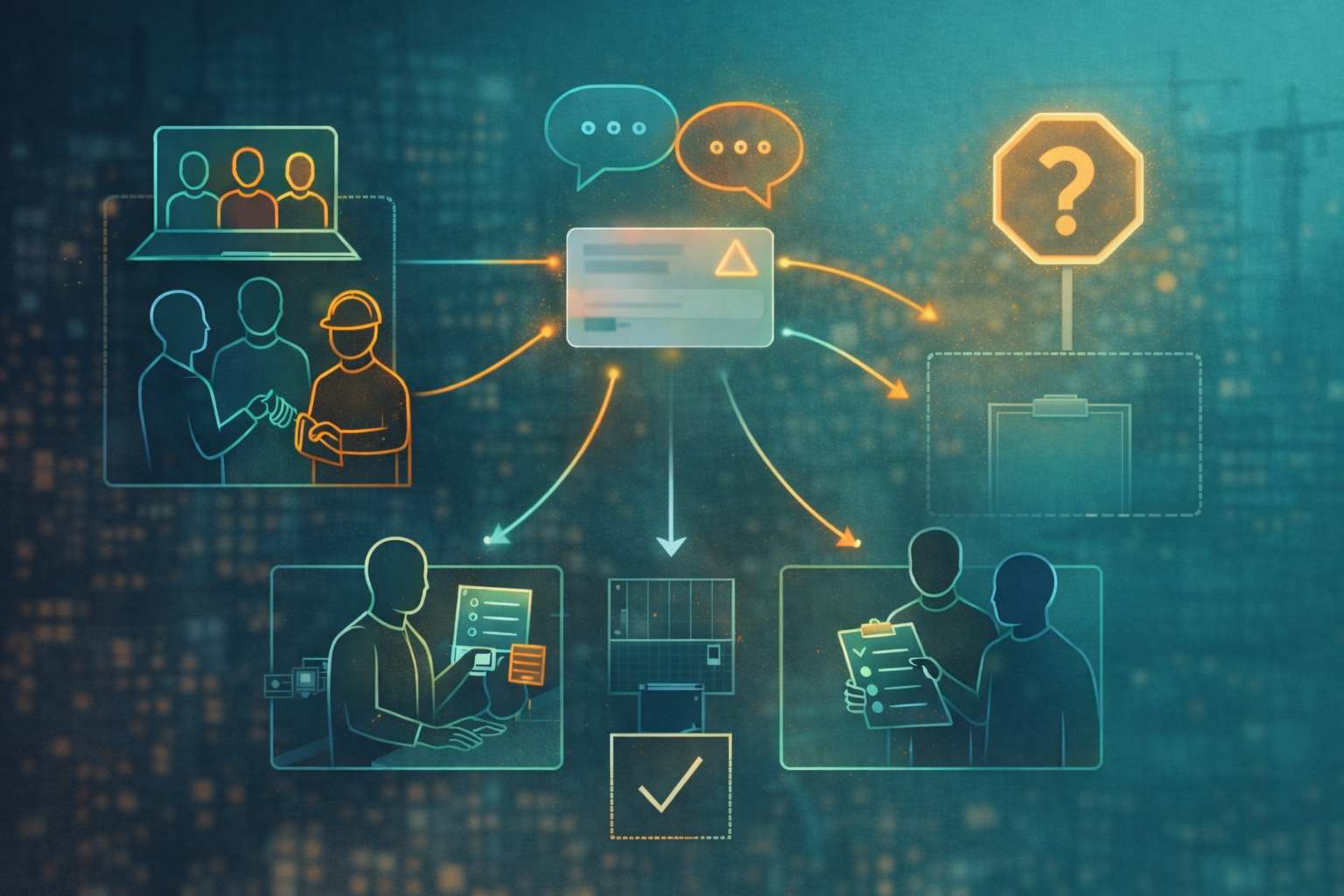
This is a direct breakdown in project execution management. Execution does not slow down because teams lack intent. It slows because ownership is invisible.
Effective construction project accountability requires every task to have a responsible role, a verifier, and a closure checkpoint. Without that structure, issues linger longer than they should.
The cost of diffused accountability
When responsibility is unclear, decisions take longer. Dependencies stack up silently. Teams duplicate effort because they are unsure who is leading.
Over time, trust weakens.
Stakeholders begin to question follow-through. Review meetings become heavier. Coordination feels harder even though everyone is working.
Diffused accountability affects timelines, quality control, and cost visibility. Not because teams lack capability, but because structure is missing.
Strong construction project accountability shortens decision cycles. Structured project execution management reduces duplication. Well-designed construction collaboration software ensures that involvement does not replace ownership.
Why meetings and messages can’t fix ownership
Alignment does not mean accountability.
Meetings create understanding. Messages create awareness. But neither defines responsibility unless supported by structured execution tracking.
Conversations rarely assign closure ownership explicitly. Agreements are not automatically converted into traceable actions.
When execution depends on memory and follow-ups, coordination becomes fragile.
If a system does not define who executes, who approves, and who verifies, responsibility remains informal. Informal accountability works in small teams. It breaks in multi-stakeholder construction environments.
That is why construction collaboration software must embed ownership inside workflows, not just enable communication.
The problem
Large construction programs involve multiple stakeholders operating simultaneously.
Tasks are discussed but not formally owned. Accountability becomes person-dependent rather than system-defined.
As coordination increases, execution slows.
Without structured project execution management, involvement replaces responsibility. And without strong construction project accountability, alignment fails to translate into closure.
The real issue
Execution does not fail because too many people are involved.
It fails because no one is clearly responsible.
The solution
Improving execution requires structured, role-based collaboration.
Every activity must have:
- A clearly assigned owner
- A defined approver
- A visible verifier
- A tracked closure status
Responsibility should not live inside meeting notes. It must live inside execution workflows.
This is where Inncircles integrated construction software becomes relevant.
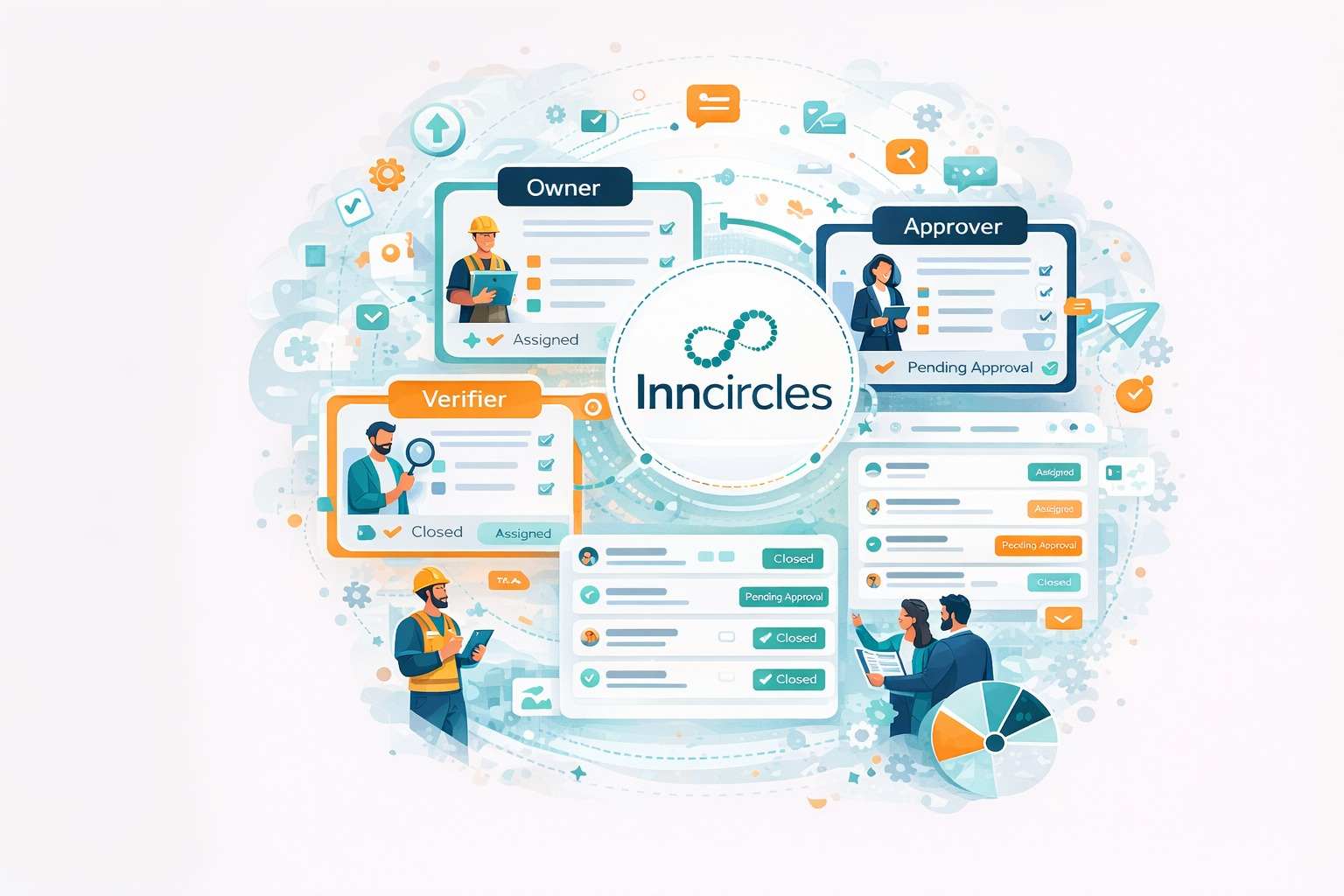
Inncircles embeds construction project accountability directly into execution workflows. Every task is linked to defined roles. Ownership is visible across stakeholders. Approvals are structured. Closure is tracked, not assumed.
Inncircles’ connected platform enables structured project execution management where coordination results in completion.
If you want to see how structured ownership improves large-scale execution, explore real-world implementation examples on the Inncircles customer case study page and see how teams reduced delays by defining responsibility at the activity level.
When accountability becomes visible, collaboration becomes faster instead of heavier.
Ready to see the change?
Execution does not slow down because teams are large.
It slows because ownership is unclear.
When roles are defined and actions are visible, collaboration becomes a strength rather than a bottleneck.
If your projects involve multiple stakeholders and growing coordination layers, it may be time to rethink how responsibility is structured.
Explore how Inncircles brings clarity to construction project accountability, strengthens project execution management, and turns collaboration into measurable progress.