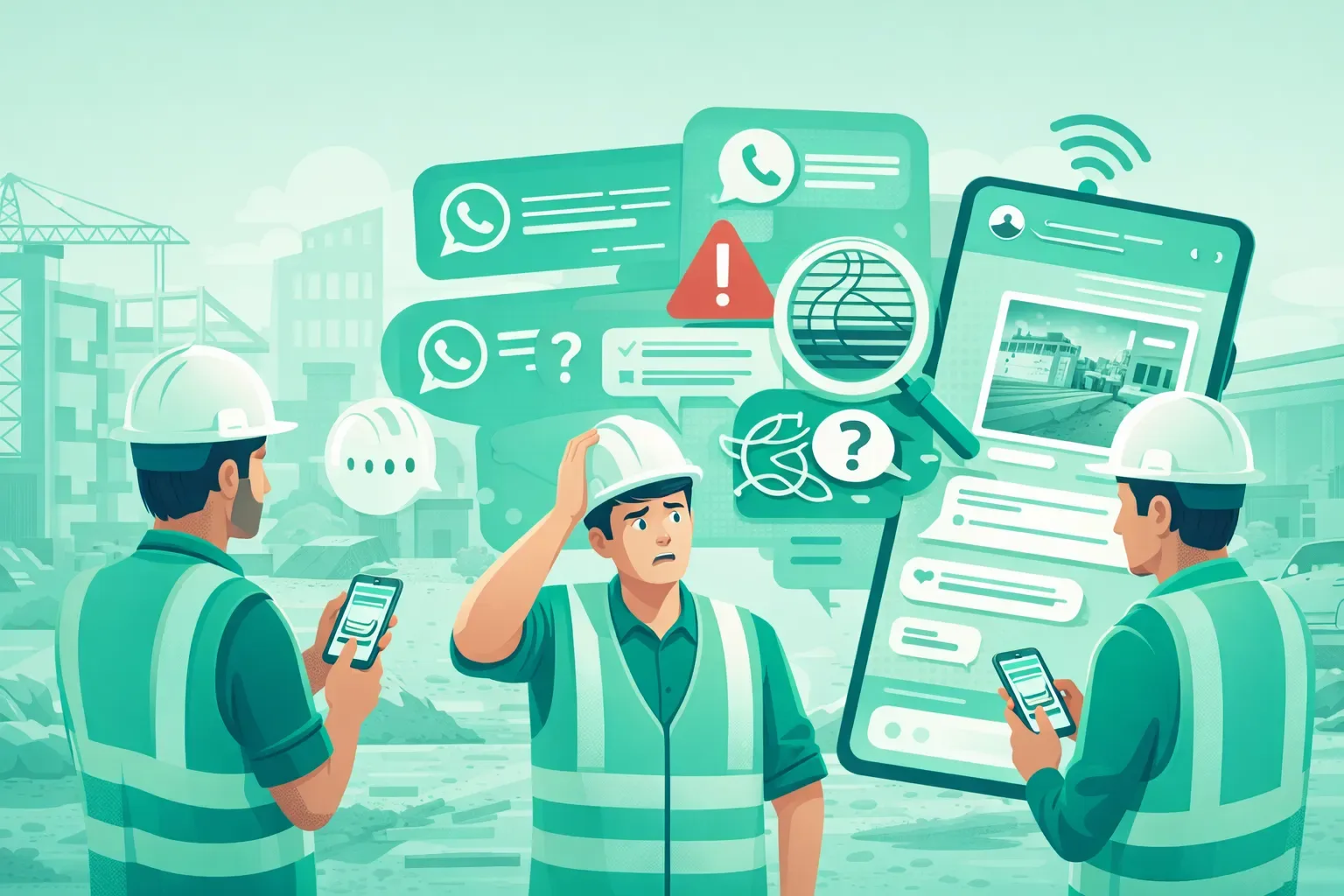
At a busy construction site, A site engineer shares a photo on WhatsApp showing completed work. A short instruction follows, asking for confirmation. Someone replies with a quick acknowledgment.
Everyone assumes the task is moving forward.
A few days later, during a routine review, it was noted that further progress had not happened. One team believes approval was already given. Another believes it was never finalized. Someone scrolls through long chat threads trying to locate the exact message that confirms what was decided. The message exists, but it is buried between site photos, voice notes, and unrelated updates.
Communication in construction is a major problem where speed replaced structure. WhatsApp and email feel efficient because they are familiar and immediate. But when they become the foundation of execution, ownership quietly disappears.
WhatsApp speeds up messages, not ownership. Learn how the best construction management software improves communication in construction with accountability and execution clarity.
Why messaging tools feel efficient at first
Messaging tools remove friction from communication in construction, especially in the early stages of a project.
They allow instant coordination between site teams, consultants, and office teams. Instructions reach everyone at once. Photos and clarifications are shared quickly, creating confidence that work is progressing ahead at the site.
Everyone already uses WhatsApp, so adoption is immediate. This ease makes teams feel productive without introducing formal systems or processes.

At this stage, even construction collaboration software can feel unnecessary because messaging appears to do the job. But this sense of efficiency is temporary. As project complexity increases, the lack of structure begins to affect the execution of tasks at the site.
How tasks get lost in conversations
As conversations grow, clarity reduces.
In chat-based execution, actions are mixed with discussions, opinions, and updates. A task instruction looks no different from a general message. This is where task management in construction quietly breaks down.
There is no structured way to assign responsibility. Multiple people see the instruction, but no one is formally accountable for that specific task. Messages are pushed upward by newer updates, causing critical actions to disappear from view.
Teams rely on scrolling, forwarding screenshots, or asking again. None of this creates reliable task management in construction. It increases repetition, delays, and missed follow-ups.
The problem of invisible ownership
Ownership becomes invisible when tasks are not structured.
There is no single person accountable for closure. Follow-ups depend on individuals who remember to chase updates, not on a system that enforces responsibility.
Different teams interpret the same message differently. One assumes approval. Another assumes further review is required. Without clear ownership, construction accountability becomes subjective.
Over time, execution becomes personality-driven. Projects move forward because a few individuals constantly push. When they step away, progress slows. Communication in construction continues, but accountability weakens.
Why do delays feel sudden?
Delays rarely appear overnight. They build quietly.
When tasks are embedded in chats, early blockers go unnoticed. Without a unified view, it’s unclear what’s pending, who owns each task, or how long it has been stalled.
Issues surface only during review meetings. By then, valuable time has already passed. Recovery actions start late, forcing teams into reactive mode.
Without clarity, construction execution tracking becomes guesswork. Teams spend time explaining what happened instead of fixing what is stuck.
Why WhatsApp and email can’t create accountability
WhatsApp and email are built for communication, not execution control.
They do not link tasks to activities, schedules, or work packages. Messages exist independently from the project plan, weakening communication in construction at scale.
They do not create reliable traceability. Context is lost across threads, making construction accountability difficult to establish.
They offer no real-time visibility. Teams cannot instantly see what is pending, what is blocked, or who owns the next step. Construction execution tracking remains fragmented and manual.
The problem
Most construction teams rely on informal communication tools to run execution.
Tasks are discussed but not structured. Instructions are shared but not assigned. Ownership exists only in assumption.
Progress depends on reminders and follow-ups. Task management in construction becomes a manual effort driven by individuals instead of a shared system.
The real issue
Communication is happening every day.
Updates are being shared constantly.
Construction accountability is not.
When ownership is unclear, execution becomes fragile. Work moves forward only as long as people remember to push it.
The solution
Inncircles is built to bring structure to communication in construction without slowing teams down.
Instead of letting actions live inside chat threads, Inncircles connects tasks directly to activities, work packages, and execution workflows. This ensures task management in construction reflects real site progress, not assumptions from conversations.
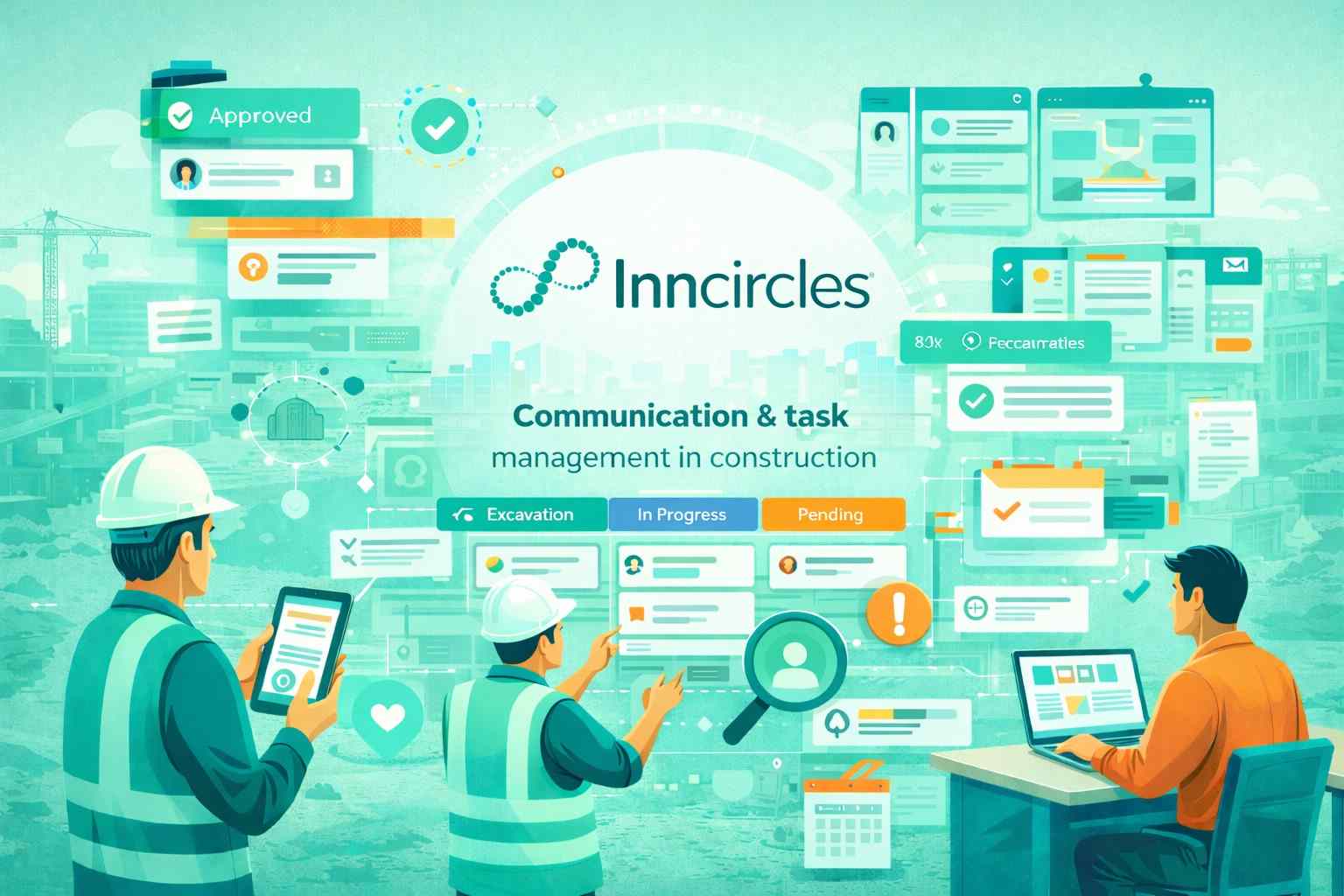
Ownership is clearly defined and visible. Every task has a responsible role, so construction accountability is no longer dependent on follow-ups or memory.
Execution status is always current. With built-in construction execution tracking, teams can instantly see what is pending, what is blocked, and who needs to act next.
Inncircles does not replace communication. It gives communication a destination, so every instruction leads to an owned outcome, and every update reflects actual progress.
From chat-driven execution to controlled delivery
Fast messages alone do not deliver projects.
Clear ownership does.
When work lives only inside chats, it fades into noise. When work lives inside connected construction software, construction accountability becomes visible, and execution becomes predictable.
If your teams are spending more time searching messages than closing tasks, it is time to move beyond chat-driven execution. Inncircles helps construction teams turn everyday communication into structured, trackable workflows that keep projects moving with clarity.
See how Inncircles’ customers bring control to communication in construction, strengthen task management in construction, and give leaders real visibility through construction execution tracking.
Book a demo with Inncircles today and experience what true ownership and connected execution look like on your projects.