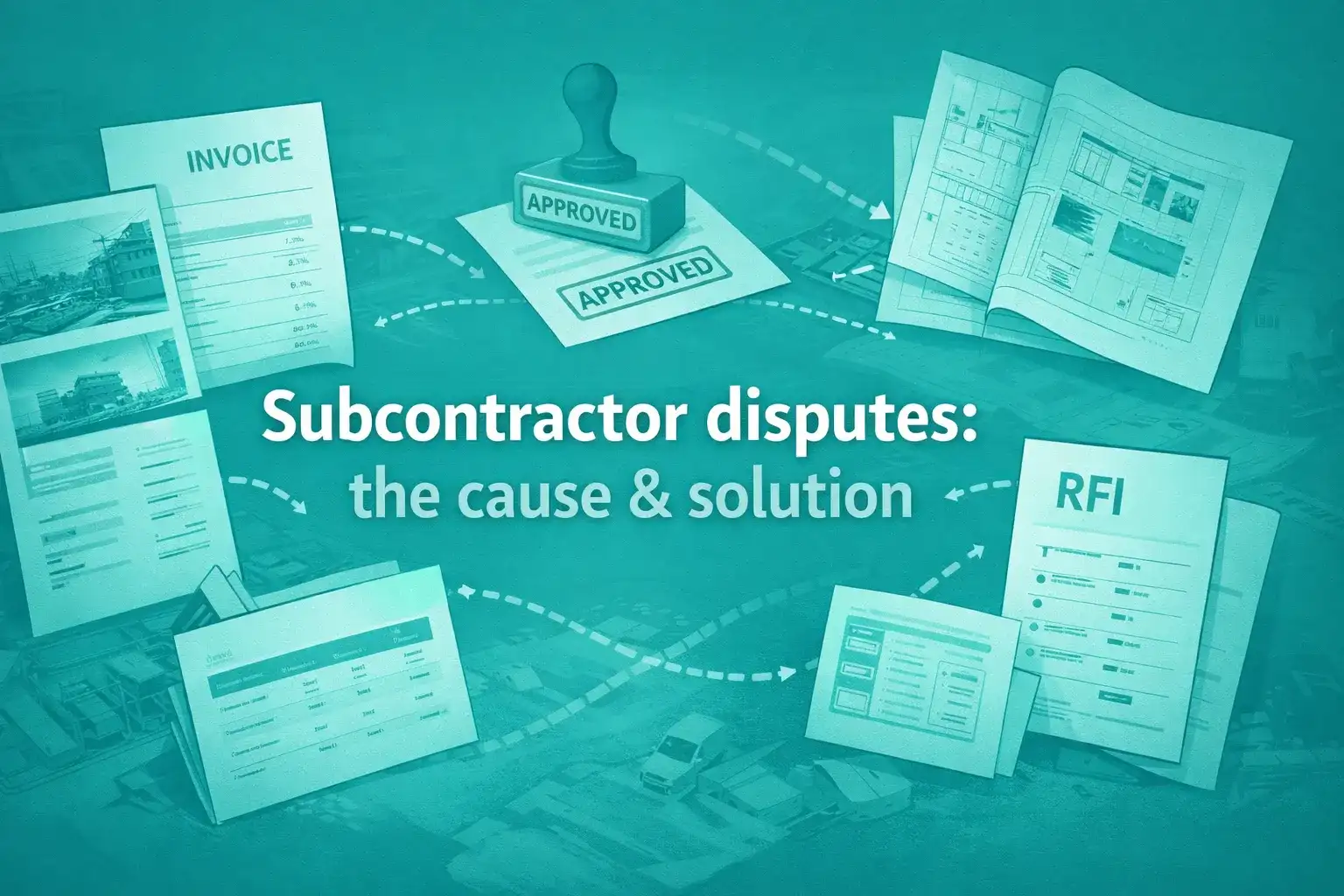
Picture this. In a construction project, the work is complete. The subcontractor submits the bill. The project team pauses. Finance asks for backup. The site team starts scrolling through photos. Emails fly. WhatsApp screenshots appear. Someone says, “This was approved.”
That pause right there is where subcontractor disputes are born.
Not because people are careless. Not because contracts are unclear. But because execution data lives in too many places, no one sees the full picture at the same time.
Explore why subcontractor disputes happen in construction, what data usually goes missing, and how the best construction software solves this.
Quick check before we go deeper
Be honest. How often does this happen on your projects?
- Progress is captured, but not linked to approvals (daily reports)
- Scope changes are discussed first and documented later (change order management)
- Drawings are updated, but the field is unsure which version is live (construction documentation)
- RFIs are answered, but not clearly tied to cost or schedule impact (RFI tracking)
If you nodded even once, you are already dealing with disconnected execution data. And that is the most common root of subcontractor disputes.
Why subcontractor disputes are rarely about the work itself
Most disputes do not start with “the work was bad.”
They start with “we cannot prove what happened, when it happened, or who approved it.”
Here is the real issue.
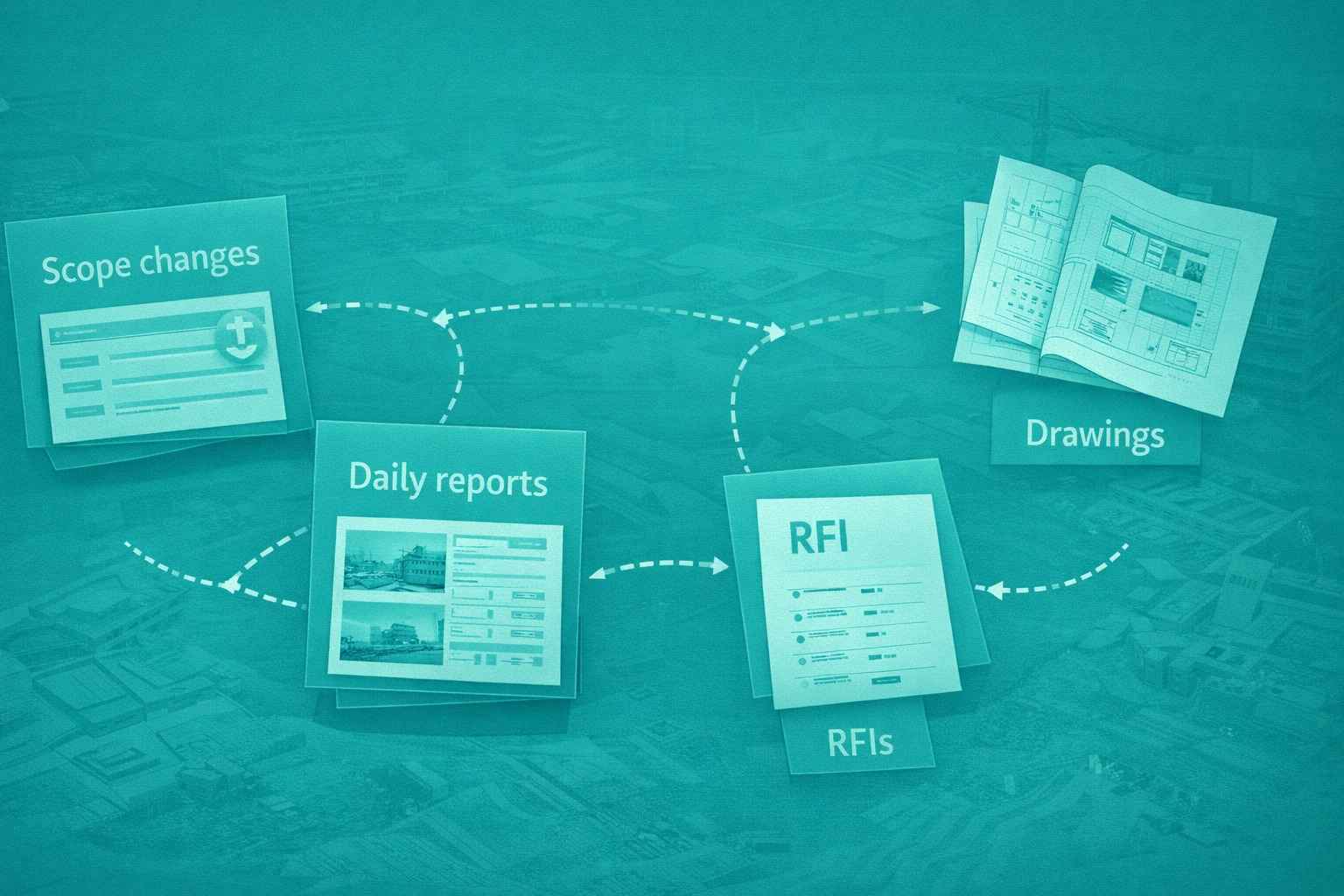
Execution happens fast. Decisions happen in meetings. Documentation happens later. Billing happens last.
When those three timelines do not align, trust starts leaking. And once trust leaks, subcontractor disputes follow.
Industry data backs this up. Change-related issues consistently rank among the top causes of construction disputes, largely due to poor documentation and delayed approvals. Projects with fragmented information flows face higher claim frequency and longer resolution cycles.
So let’s look at where things usually break.
The four execution data gaps that trigger subcontractor disputes
1. The scope gap
This is where change order management either works quietly or fails loudly.
Extra work often starts with a site instruction. The paperwork follows days or weeks later. By then, memories fade, and expectations drift.
Ask yourself:
- Was the change logged the same day?
- Was it tied to a location, quantity, and activity?
- Was approval recorded before billing?
If any answer is “not exactly,” you have a scope gap.
Modern construction SaaS platforms like Inncircles treat change order management as a live workflow. Changes are initiated from site data, linked to actual execution, and tracked until approval. no backtracking. no guessing.
2. The proof gap
This is the silent killer of subcontractor disputes.
Work gets done. photos exist. Progress was real. But when the billing arrives, the proof is scattered.
This is why daily reports matter more than people think.
Strong daily reports are not diaries. They are structured execution records that capture:
- Planned vs actual progress
- Workforce and equipment
- Site constraints and delays
- Geo or location-tagged photos
- Inspections and partial sign-offs
Inncircles connects daily reports directly to tasks, locations, and commercial items. So when someone asks, “Why did this take longer?” The answer is already there. No searching. No storytelling.
3. The instruction gap
This gap shows up as “we worked off the wrong drawing.”
Usually, the drawing was updated. The problem is that the construction documentation was not clearly controlled.
Disconnected systems create confusion:
- Revised drawings sit in the email.
- Older versions stay on-site tablets.
- Teams rely on forwarded files.
A good construction documentation setup behaves like a single source of truth. one current version. clear revision history. instant access from the field.
Inncircles focuses on this connection. drawings, revisions, and site execution live in one environment, so instructions are not just issued; they are applied.
4 The clarification gap
This is where RFI tracking either protects the project or exposes it.
Most RFIs get answered. The problem is what happens next.
Was the answer:
- acknowledged by the site team?
- linked to the affected activity?
- assessed for cost or time impact?
When RFI tracking is disconnected, answers float without consequence. Later, someone claims the response changed the scope. Someone else says it did not.
With Inncircles, RFI tracking is tied directly to execution data. questions, answers, drawings, and impacts sit in one chain. Nothing floats. Nothing disappears.
How connected execution data reduces subcontractor disputes
Let’s simplify this.
Disputes shrink when everyone sees the same story.
Connected execution data means:
- Site activity feeds daily reports.
- RFIs connect to drawings and tasks through rfi tracking.
- Changes originate from real impacts using change order management.
- Approvals and records live inside construction documentation.
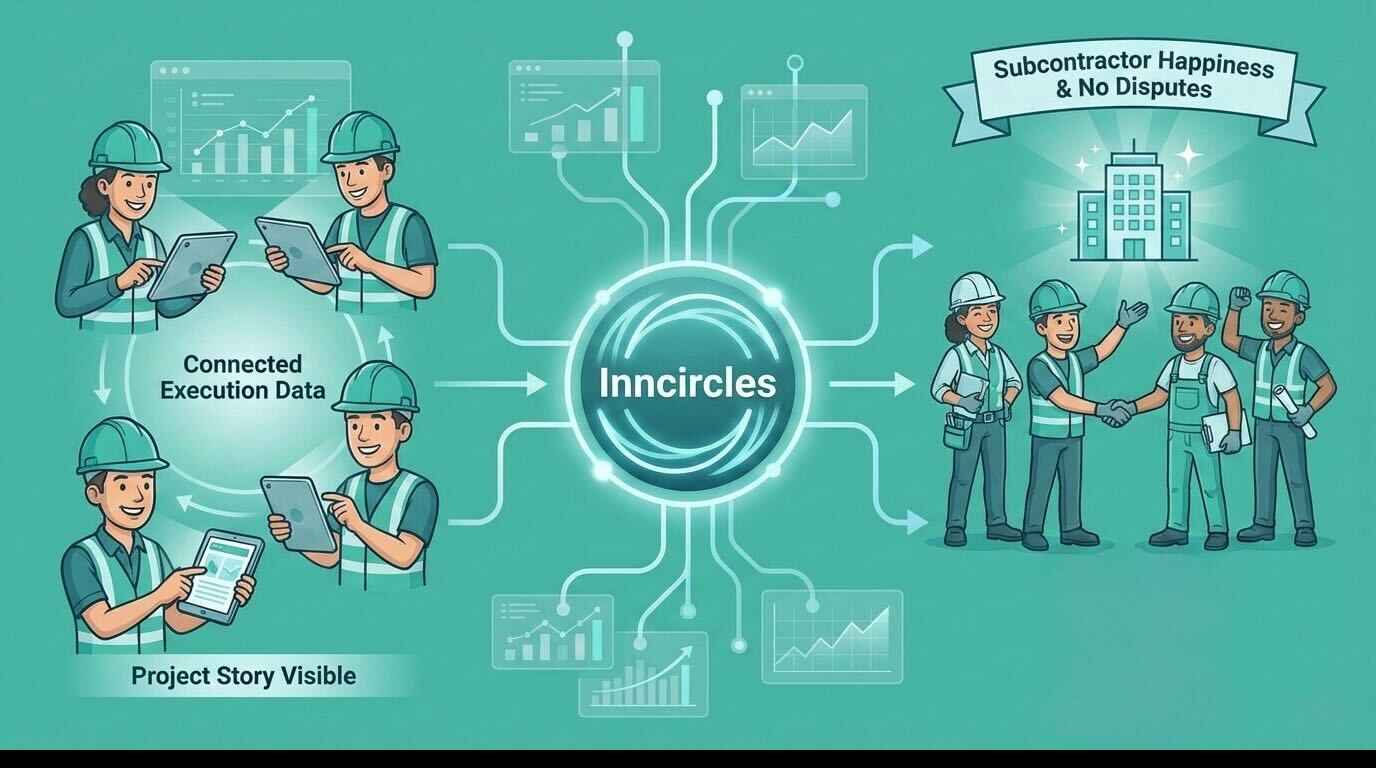
Inncircles construction software is built around this flow, not as a reporting tool, but as an execution system that naturally captures evidence while work happens. No extra steps. No duplicate entry.
Two simple metrics that reveal dispute risk early
Metric 1: Change approval delay
How long does it take from identifying a change to approving it in change order management?
Long delays increase friction. expectations drift. disputes follow.
Teams using connected workflows approve changes faster because proof is already attached.
Metric 2: Invoice traceability
Pick any invoice line and ask:
“Can I trace this to daily reports, photos, and an approval in under two minutes?”
If not, the data is disconnected.
Inncircles is designed so that traceability is built in, not assembled later.
A practical weekly routine using connected data
Here is a simple habit loop that works.
- Site teams submit structured daily reports.
- Open issues flow into RFI tracking.
- Impacts convert into change order management.
- Updated drawings live in the construction documentation.
- Billing pulls directly from approved records.
No meetings needed to reconstruct history. The system already knows it.
The takeaway
Most subcontractor disputes are not legal problems; they are data problems.
When execution data is disconnected, people argue. When it is connected, teams verify.
Inncircles construction software reduces disputes by making execution data flow naturally from the site to the office to the payment.
If the story of your project is always visible, disputes lose their power.
And that is how modern construction teams stay focused on building, not debating.