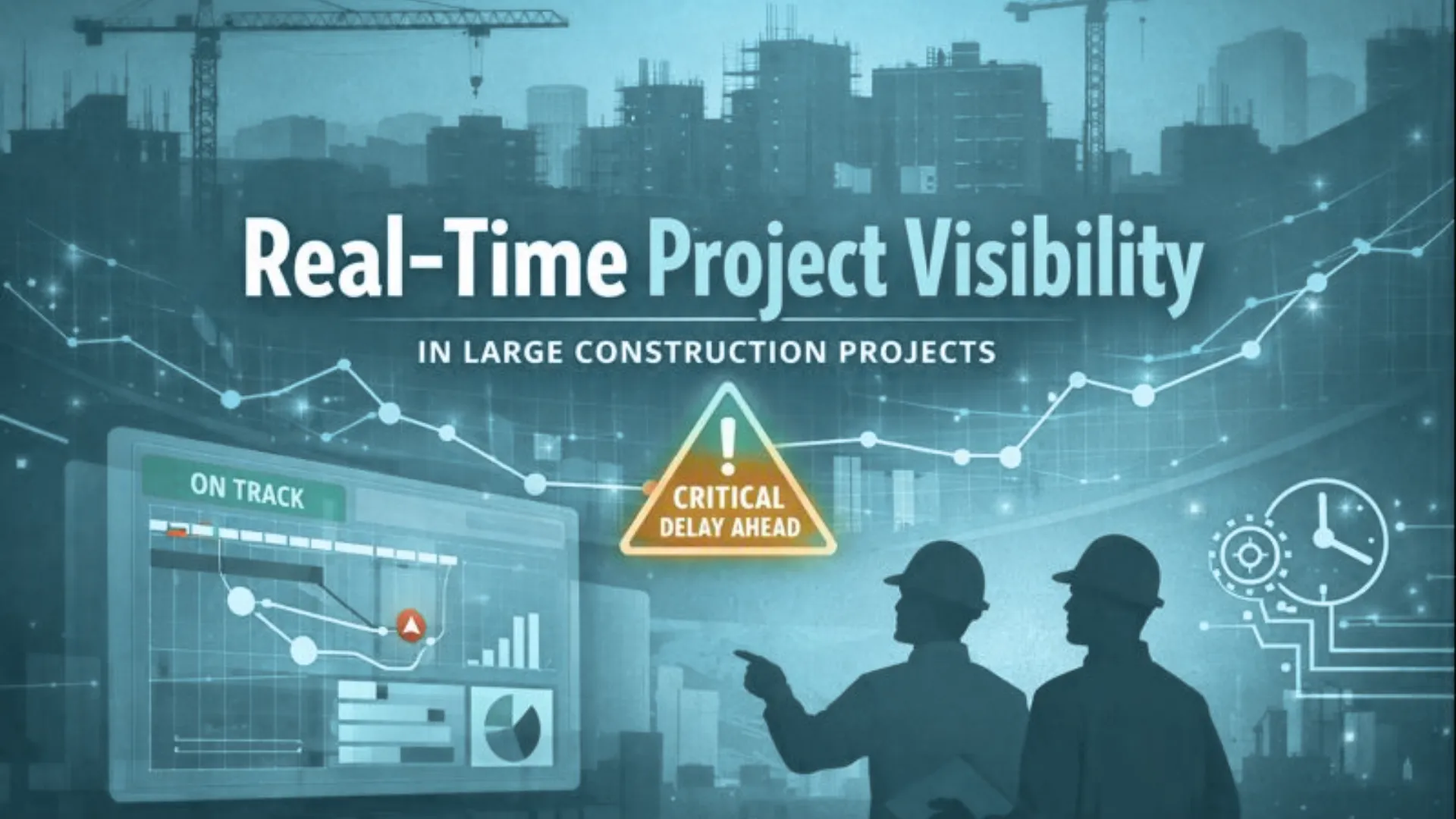
Picture this. In a construction project, the monthly project review meeting begins. The project manager shares slides. The status is reported as “on track.” The project dashboard displays a solid green.
Then a question cuts through the routine:
“Which activity on the critical path is likely to deviate from the baseline and delay handover?”
The room falls silent.
In large construction projects, where dozens of contractors, teams, and agencies operate simultaneously, real-time project visibility is often assumed rather than designed. Progress updates are manually consolidated, schedules are reviewed against outdated baselines, and critical path deviations surface only after float is already consumed. Without real-time project visibility, teams are not managing the live schedule; they are reviewing history.
This is not about adding more dashboards. It is about understanding current deviation from baseline, live critical path health, and activity-level progress across the project early enough to act before delays become irreversible.
Discover why real-time project visibility is critical in construction and how the right construction management software makes it practical at scale.
Why large construction projects are uniquely complex
Managing a large construction project is inherently complex.
Multiple work fronts progress in parallel. Activities are tightly linked through dependencies, float, and shared resources. Owners, PMCs, contractors, and government bodies operate on different timelines but impact the same critical path.
In this environment, a delay at the activity level rarely stays local. A single deviation from baseline on a critical activity can cascade across zones, trades, and milestones. Traditional construction project management methods struggle to expose these early signals. This scale and interdependency demand modern construction management software built around live schedules and critical path logic.
The illusion of control created by periodic reporting
Many projects rely on weekly or monthly reports to assess control.
These reports are snapshots of the past. By the time leadership reviews them, actual progress has already moved on, baseline deviations have grown, and critical path float may already be exhausted. Aggregated percentages hide activity-level slippages and mask risks behind averages.
A “green dashboard” at the project level can still contain multiple activities drifting off baseline on the critical path. This creates an illusion of control. Teams believe they have project visibility when, in reality, they are reacting late. Real-time project visibility removes this gap by continuously comparing live progress against baseline and critical path logic. This is the difference between reporting and true project tracking software.
When visibility is delayed, risk compounds
When real-time project visibility is missing, risk does not simply increase; it compounds.
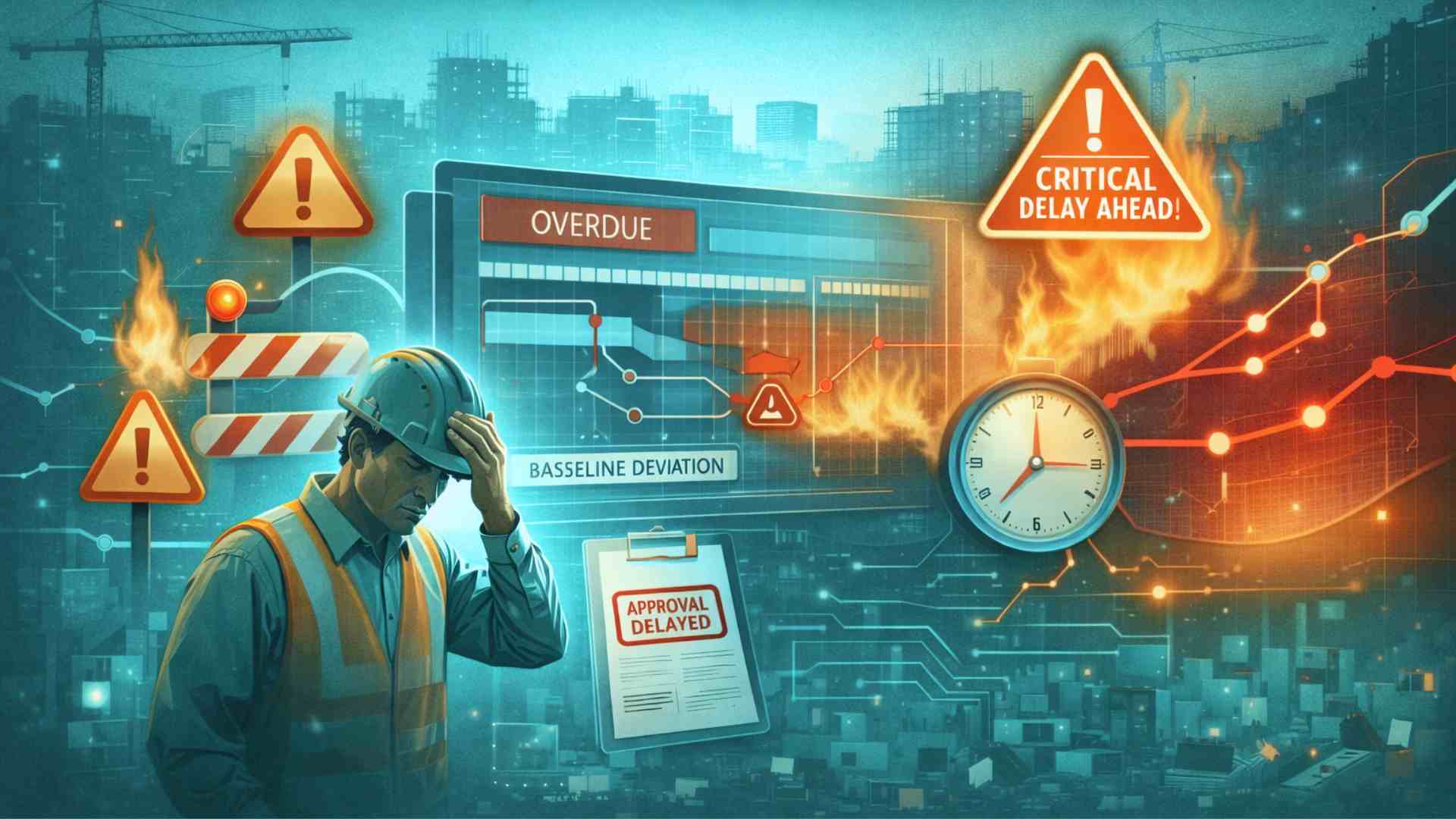
Baseline deviations go unnoticed until recovery windows close. Critical path shifts are identified only after milestone impact. Resource clashes and approval delays quietly erode float. By the time issues appear in reports, corrective action is limited, expensive, and disruptive.
This is how small schedule variances turn into project-wide delays. It directly weakens construction risk management, as risks are identified after they have already materialized. Real-time dashboards allow teams to intervene while recovery is still possible.
According to an FMI and Autodesk survey, 14% of construction rework is attributed to bad data and poor real-time visibility, showing how delayed, disconnected visibility turns small field-level misses into expensive downstream disruption.
Project-level decisions require live, cross-project insight.
Leaders of large projects do not need more data.
- They need live insight tied to the schedule.
- They need to know which activities on the critical path are deviating today.
- They need visibility into where baseline slippage is forming right now.
- They need clarity on which teams are blocked, which approvals are pending, and how these constraints affect downstream activities.
Without this live, activity-level visibility, decisions are based on assumptions rather than facts. This is what distinguishes basic project tracking software from a true construction management software platform designed for executive decision-making.
Why spreadsheets and standalone dashboards fall short
Many teams attempt to manage visibility using spreadsheets and disconnected dashboards.
This approach breaks down at scale. Manual updates delay baseline comparisons. Different contractors report progress differently. Critical path logic is rarely recalculated in real time. Conflicting versions of the schedule create confusion rather than clarity.
Most standalone dashboards display data but do not connect it to activities, dependencies, or baseline variance. Without this linkage, leadership sees numbers, not impact. The construction management software functions as a single execution system, not just a reporting layer.
What real-time visibility actually means in practice
So what does real-time project visibility look like on a live project?
It means field progress updates directly affect schedule calculations. Activity-level progress continuously updates deviation from baseline. Critical path changes are visible as they happen. Delays automatically highlight impacted downstream activities and milestones.
This creates exception-based visibility. Leaders do not review everything; they focus on what has changed, what is drifting, and what needs intervention. This is the practical power of a modern project dashboard built on real construction technology.
Moving from oversight to active project governance
With real-time dashboards providing a live schedule pulse, leadership shifts from passive review to active project governance.
Instead of reviewing lagging reports, leaders intervene while the float still exists. Accountability becomes clearer because progress, delays, and blockers are visible at the activity level. Decisions are tied to live schedule impact, not retrospective explanations.
This is how large projects move from reactive firefighting to predictable delivery. It turns construction project management into a strategic capability rather than an administrative function.
The cost of managing the blind
Many large projects still operate with fragmented, delayed visibility.
Baseline deviations are discovered too late. Critical path shifts are debated in meetings instead of flagged by systems. Governance becomes a cycle of explanations rather than prevention.
The real Issue
Large construction projects do not lack data.
They lack real-time, connected visibility into baseline deviation and critical path health.
The solution
Large projects need a single, real-time execution view where live site data updates schedules automatically, baseline variance is visible instantly, and critical path impact is clear to all stakeholders.
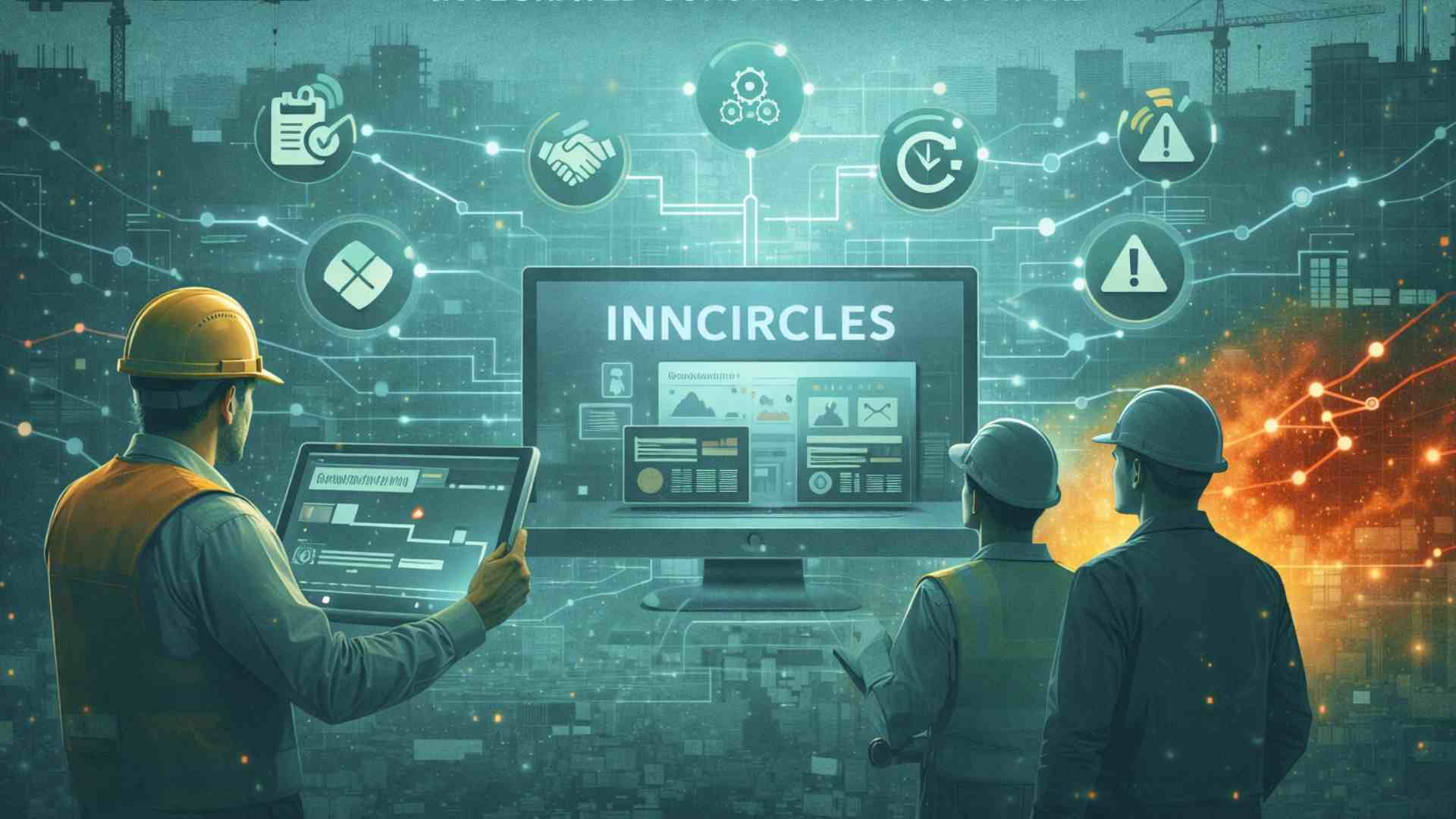
Inncircles is built for this reality. It is an integrated construction software platform that connects live execution data, schedules, and workflows into one system, enabling proactive project governance before delays become permanent.
At scale, visibility is not a reporting problem; it is a leadership problem.
Real-time insight allows construction projects to move from coordination by meetings to coordination by systems.
Ready to see your project in real time?
Discover Inncircles, the construction management software that delivers true real-time project visibility, critical-path-aware project dashboard control, and a single source of truth to build with confidence.