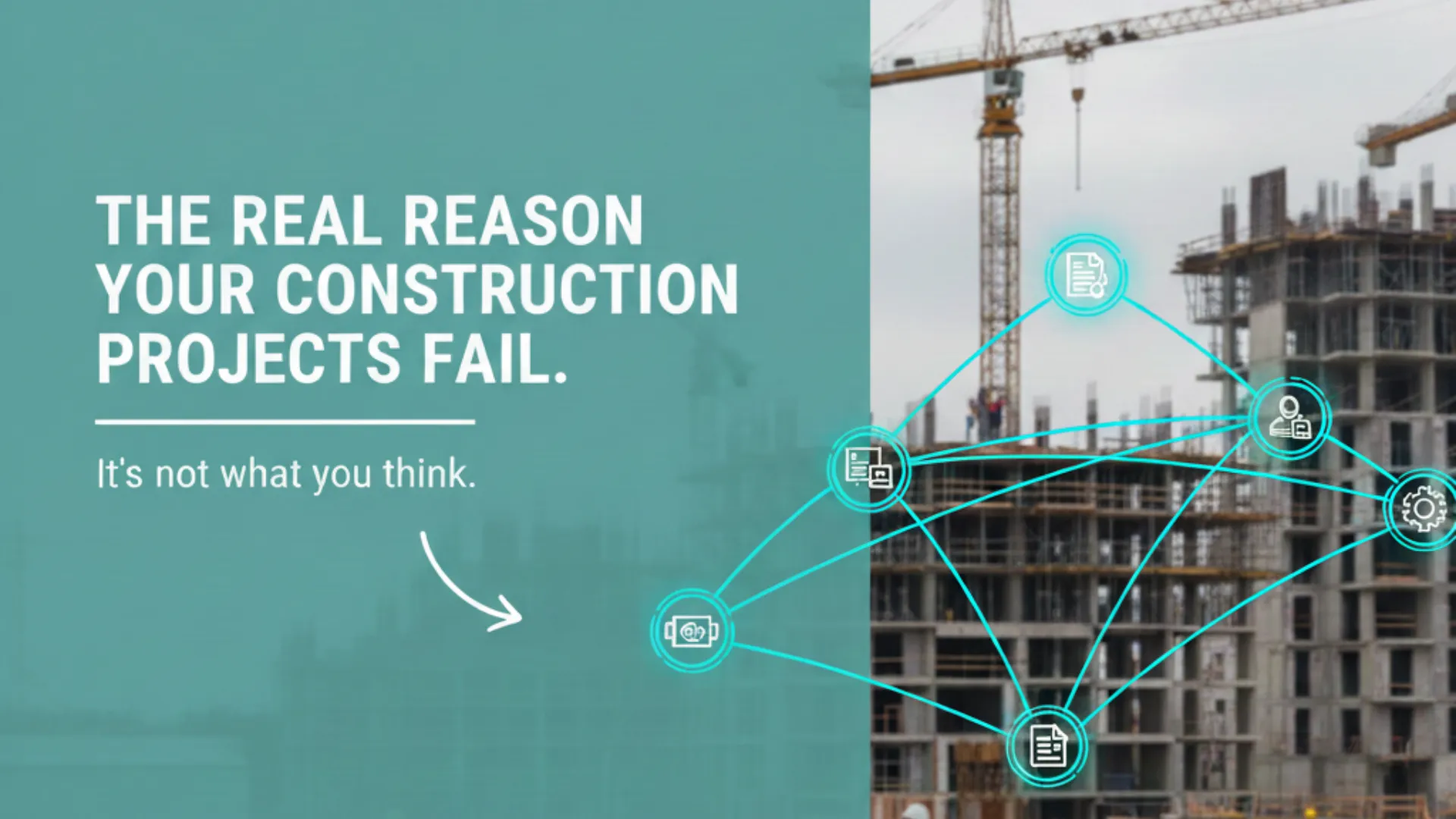
In the complex world of construction, the lack of integrated construction software often leads to costly delays and communication breakdowns.
You hired the best contractors.
You are using modern scheduling systems.
You hold weekly coordination meetings.
So why are you still facing delays, budget overruns, and frustrated teams?
Here is the uncomfortable truth:
Your project is not failing because people are not working hard enough. It is failing because your data, workflows, and teams are not working in one connected environment.
In today’s construction world, effort is not enough. Connection is everything.
See how projects start to slip across pre-construction, during construction, and post-construction when data is disconnected, and how integrated construction software helps you regain control.
How disconnection starts in pre-construction
Most projects look healthy in pre-construction. The baseline schedule is approved, the budget is locked, and the contracts are signed. On paper, everything lines up.
In reality, key project information already sits in different places.
- Design teams work on drawings and models in their own systems.
- Quantity surveyors prepare the BOQ and cost plans in spreadsheets.
- Bid clarifications, RFQs, and scope changes live in long email threads.
- Planners build the baseline programme in a separate scheduling system.
None of this is wrong. But when these streams do not talk to each other, small gaps appear.
A drawing revision is not updated against the BOQ.
A risk identified in a pre-bid meeting never reaches the final schedule.
A value engineering change agreed during negotiation does not flow into the issue register.
The project enters execution with misaligned assumptions, even before the first excavation starts. This is the first hidden cost of poor construction management. The project is already out of sync, but the dashboards still look green.
What really goes wrong during construction when data is disconnected
Once work starts on site, the impact of disconnected systems becomes obvious.
- On-site, the foundation is already cast.
- In the office, the project dashboard still shows “awaiting start” because the daily report has not been updated in the system.
- Site teams raise RFIs in one format.
- Consultants respond through email.
- Planners update look-ahead plans in a separate file.
- Material delivery dates are tracked in another spreadsheet.
- Real-time visibility does not exist. Decisions are taken one or two weeks behind reality.
Disconnected workflows create bottlenecks
Take a simple change request.
A site engineer notes the issue in a daily log.
The project manager forwards it as an email.
The consultant prints the drawing, marks it, scans it, and sends it back.
The contractor updates their own copy of the plan.
Commercial teams adjust costs separately.
At every handoff, there is a delay and risk. There is no single view of:
- Which RFIs and change orders are open
- Which approvals are blocking work fronts
- Which inspection requests are overdue
- Which materials are holding up critical activities
One stuck approval quietly delays multiple downstream tasks. Recovery starts late, when options are already limited and expensive. Teams are busy, but the project is not moving as one system.

Teams work hard but not together
Contractors update their own progress trackers.
PMCs run project reviews in a different format.
Consultants rely on email threads and meeting minutes.
Owners see only high-level monthly reports.
Everyone is doing their job. But they are doing it in isolation.
You see multiple versions of the same drawing, different progress numbers in different reports, and long discussions on calls to reconcile “which number is correct.
Accountability becomes diluted across roles and documents. Hard work does not always convert into predictable progress because the connected workflows are missing.
This is where workflow integration matters. Not just more software, but one layer that links site data, office decisions, and programme status.
The post-construction impact when information is scattered
The effect of disconnected systems does not end at handover.
In post-construction, you feel it through:
- Slow preparation of as-built documentation and handover packs
- Disputes over quantities, scope, and delays because records are scattered
- Claims that take months to resolve because supporting evidence sits in different formats and systems
- Difficulty in tracing the full history of a section, asset, or work front across its lifecycle
Final bills, claims, and audits depend on reliable project records. When data sits across emails, spreadsheets, and isolated applications, even closing a project becomes a project by itself.
The issue is not only the schedule or cost. It is the lack of a single, consistent project story from pre-construction to post-construction.
Why adding more systems often makes it worse
Many companies respond to these problems by adding more software for isolated use cases.
- A separate application for RFIs.
- Another one for inspections.
- Another one for drawing management.
- Another one for cost control.
Without workflow integration, every new system becomes:
- Another login
- Another data entry point
- Another report that does not match the others
Teams spend more time reconciling information than executing work. Duplicate data entry creates errors. Conflicting versions of the truth create confusion.
The problem is not technology. The problem is technology that is not integrated.
More software does not automatically mean better construction management. Only integrated construction software can provide the real-time visibility and control that leadership expects.
What integrated construction software should do across all three phases
Modern construction projects need a connected execution layer that works across pre-construction, construction, and post-construction.
A truly integrated construction software environment should:
Provide a single source of truth
All key project data lives in one system of record, not across multiple disconnected files and applications. Schedules, RFIs, drawings, issues, and quantities can be viewed against the same baseline.
Connect workflows across the lifecycle.
- Pre-construction decisions flow into execution plans.
- Execution data feeds back into progress, risk, and commercial views.
- Post-construction documentation is generated from the same underlying history.
Deliver real-time insight, not after-the-fact reports
Leadership sees which work fronts are blocked, which approvals are late, and which changes impact the critical path without waiting for weekly consolidation.
Align all stakeholders on one live view of the project
Contractors, PMCs, consultants, and owners do not work from separate versions of reality. They act on the same connected information, with clear ownership for each step.
This is the shift from doing more reviews to having better real-time visibility from manually stitching data to letting the system keep everything connected.
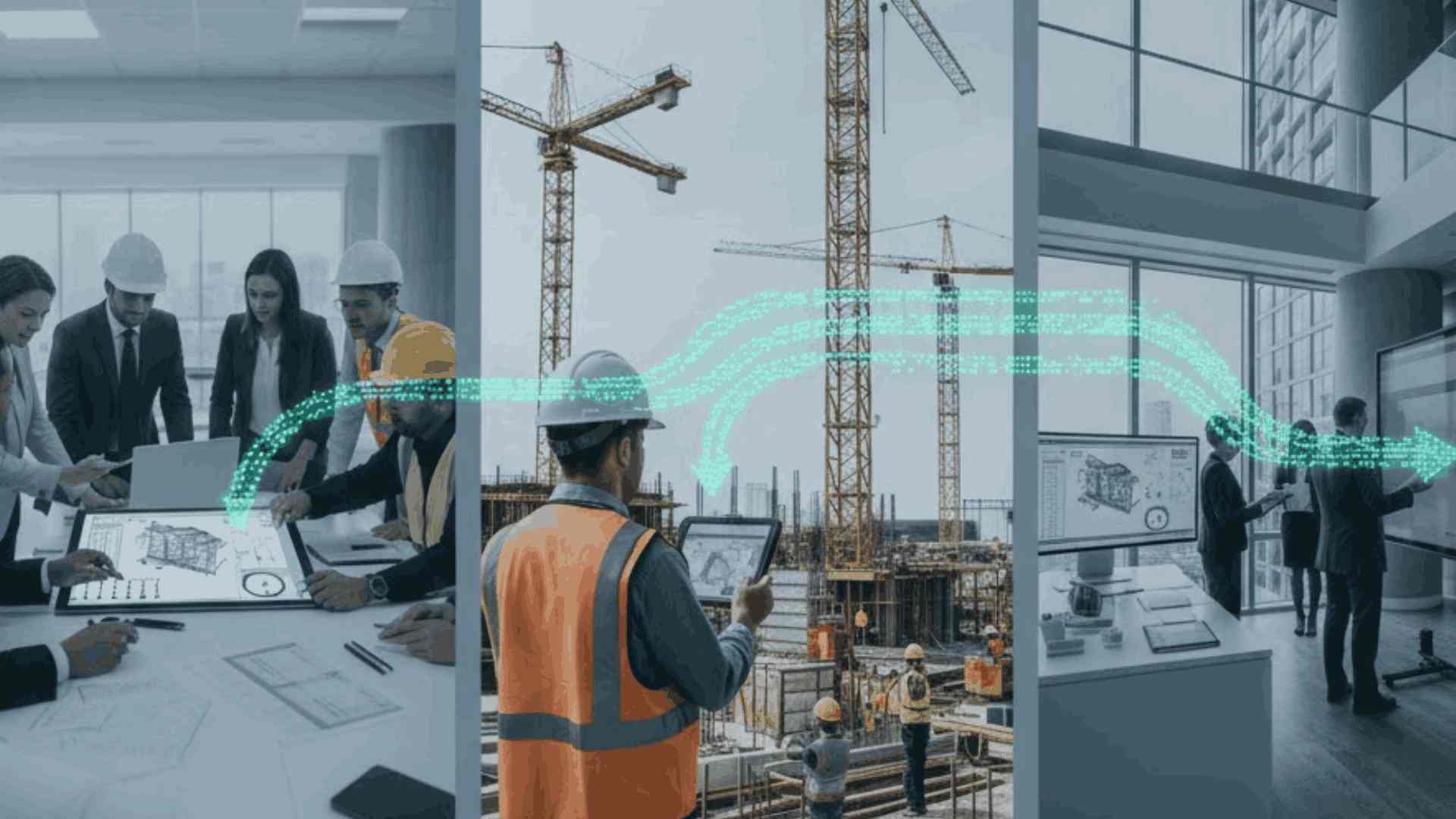
What is really going wrong in your construction projects
Projects do not fail because your teams lack experience.
They fail because:
- Data, workflows, and people operate in isolation
- Information is delayed, fragmented, and manually consolidated
- Leaders react to issues instead of preventing them early
The real issue is simple.
Construction projects are not short of effort. They are short of connection.
To solve this, modern construction needs connected software where project data flows seamlessly, workflows are standardised and transparent, and every stakeholder shares a single, real-time view of progress.
How Inncircles fits into this picture
Inncircles is built on this principle.
It is integrated construction software that brings your data, your workflows, and your teams onto one unified execution system, across pre-construction, construction, and post-construction.
Instead of relying on manual follow-ups and individual heroics, Inncircles helps you:
- Keep project information connected, not scattered
- Run coordinated workflows instead of parallel, disconnected processes
- Give leadership the visibility they need to make confident decisions
Projects no longer depend on a few people holding everything together. They succeed because information, workflows, and teams move together by design.
"Construction will always be complex. With integration, it does not have to feel out of control.
The difference between projects that struggle and those that scale is not effort. It is how well your information, your workflows, and your teams are connected."
Ready to build connected projects?
Explore Inncircles construction management software, designed to provide real-time visibility, seamless workflow integration, and a single source of truth for your entire construction team.